The landscape of digital content is undergoing a seismic shift as we approach 2026. With the creator economy projected to hit a valuation of $528 billion, the competition has never been fiercer. This comprehensive guide explores the essential ai creator trends that are redefining success for influencers, YouTubers and digital entrepreneurs. From the transition of Search Engine Optimization (SEO) to Generative Engine Optimization (GEO) to the rise of predictability over simple consistency, we provide a data-driven blueprint for creators looking to scale.
Whether you’re a micro-creator looking for the latest creator tools 2026 or an established brand navigating the complexities of influencer marketing 2026, this article offers original research and actionable solutions. Discover how to leverage generative ai for creators to automate your workflow without losing your human touch and learn the specific platform hierarchies that will dominate the next two years. Don’t just watch the industry evolve master the ai creator trends that will allow you to win big and avoid falling behind.
1. The Multi-Platform Imperative: Diversify or Disappear
The days of being “just a YouTuber” or “just a TikToker” are officially over. A significant shift has occurred in the creator economy, driven largely by platform volatility and the democratization of editing tools. In 2026, relying on a single app to house your entire community is a risk you cannot afford to take.
The Shift in Platform Mix
Previously, expanding to a new platform meant doubling your workload. You had to deal with watermarks, clunky export processes and constant formatting issues. In 2026, AI creator trends clearly show that AI video editors and advanced content repurposing tools have removed these barriers entirely. Most platforms now allow clean exports without watermarks, while ai tools for short videos in 2026 make it easy to turn one long-form video into multiple high-performing Reels, TikToks and YouTube Shorts fast, consistent and optimized for each platform’s algorithm.
This ease of repurposing has birthed a new standard: successful creators in 2026 must be active on two or more platforms. This isn’t just about reach; it’s about insurance. With ongoing uncertainty surrounding platforms like TikTok, diversifying your presence is the only way to safeguard your audience and your income.
Establishing a Platform Hierarchy
While you need to be everywhere, you cannot treat every platform equally. You need a strategic hierarchy. It is not enough to say, “I’ll post on TikTok, Instagram and YouTube.” You must identify your primary driver versus your secondary supports.
- Primary Platform: Where you build deep connection and community (e.g., YouTube or a newsletter).
- Secondary Platform: Where you drive discovery and viral reach (e.g., TikTok or Instagram Reels).
Knowing this hierarchy allows you to prioritize effectively during busy periods. If you can only manage one post this week, it goes to your primary platform.
Choosing Your Battleground: Brand Deals vs. Community
Your platform choice should align strictly with your financial goals.
- For Brand Deals: If your goal is high-ticket sponsorships, TikTok remains the number one platform for brand investment, followed closely by Instagram. YouTube takes third place and Facebook fourth. If brand deals for creators 2026 are your focus, you must have a presence on one of these top four.
- For Community & Direct Monetization: In 2026, creators who prioritize built-in revenue tools and fan-backed income see a different platform pecking order. YouTube dominates by offering predictable earnings and deeper community bonds through features like memberships and subscriptions. Meanwhile, Snapchat stands out as an unexpected contender, providing competitive creator payouts even without heavy brand demand making it a strong option for direct, platform-led revenue.
2. Predictability is the New Consistency
For years, gurus have screamed one word at you: Consistency. But in 2026, consistency is getting a rebrand. The trend is no longer just about posting often; it is about posting predictably. We call this trend: Predictability is the New Consistency.
The Power of the Signature Series
AI creator trends indicate that 2025 was the breakout year of the “Signature Series” and this momentum is accelerating into 2026. In an increasingly chaotic content landscape, audiences crave structure and predictability. They want to know exactly what type of content they’ll get and when. A signature series, such as a “Walk and Yap” reel every Tuesday or a “Business Update” every Friday, creates a reliable appointment with your audience. This predictable structure has become a major growth driver, with many creators gaining tens of thousands of followers simply by turning their content into a recognizable, repeatable show.
Training the Algorithm (and Your Audience)
By adopting a predictable format, you are doing two things:
- Training Your Audience: You are inviting them to build their weekly schedule around your content. They stop scrolling aimlessly and start actively seeking you out on “Ask Me Anything Wednesday.”
- Training the Algorithm: Algorithms love patterns. When you deliver a consistent format at a consistent time that generates consistent retention, the AI reward you.
This doesn’t mean you need a TV-production budget. It means you need a creator playbook 2026 that includes repeatable formats. Whether it’s a monthly “Letter to My Readers” newsletter or a weekly deep-dive video, this predictability builds trust. Trust builds authority. And authority builds a sustainable business that survives algorithm updates.
3. Customizing the Creative Process: The Rise of AI-Driven Personalization
As we navigate the evolving landscape of AI creator trends, one of the most visible shifts is happening in the visual aesthetic of digital content. In the early days of social media templates, creators often fell into a trap of uniformity. You would scroll through Instagram and see dozens of posts with the same fonts, layouts and colors. While templates democratized design, they also diluted brand identity.
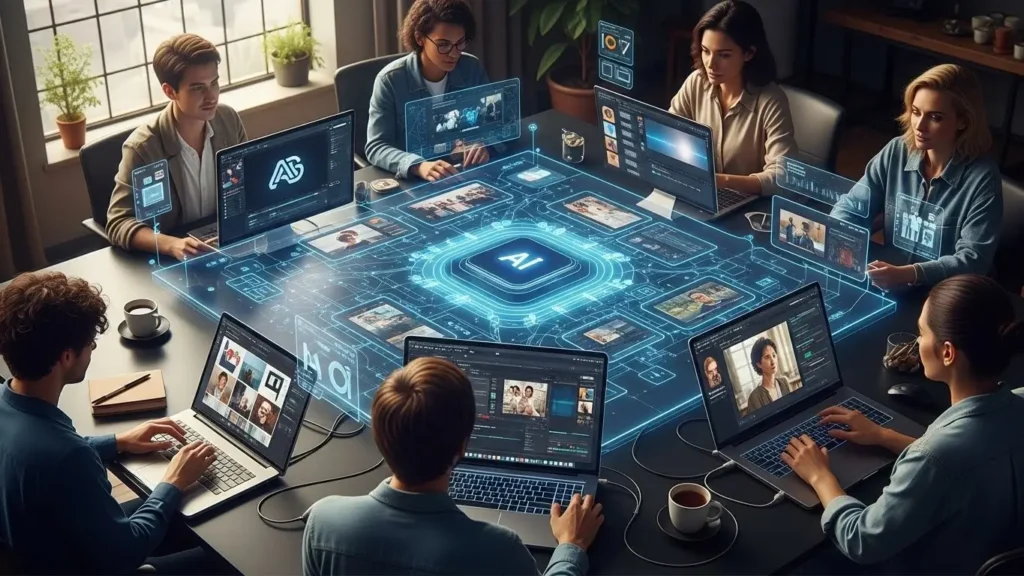
In the creator economy 2026, the demand for unique, highly personalized visual assets is higher than ever. This is where generative ai for creators steps in to solve the problem of “template fatigue.” Tools like Picsart are leading the charge by integrating ai creator trends that allow for the generation of custom templates based on specific, descriptive prompts.
Beyond Generic Templates with AI Creator Trends
The integration of ai image generators for creators into standard editing workflows means that you no longer have to settle for what everyone else is using. By leveraging a modern ai content workflow for creators, you can build a visual identity that is entirely yours. You can use best ai tools for creators 2026 to describe a specific vibe perhaps “retro-futuristic with a pastel palette” and the AI will generate a unique template layout that aligns with your specific brand voice.
This level of customization is one of the most powerful ai creator trends because it solves the “blank page” problem while maintaining originality. By using the “enhance my idea” features found in the latest creator tools ai, you can refine vague concepts into polished, professional assets that stand out in a crowded feed. This trend is essential for youtube trends 2026 and instagram trends 2026, where visual differentiation is the key to stopping the scroll.
Streamlining the Workflow with AI Tools for Youtubers
For those focusing on video, ai tools for youtubers and ai tools for tiktokers are revolutionizing the pre-production and post-production phases. Instead of spending hours on mundane tasks, creators are using ai creator trends to automate the creation of custom thumbnails, overlays and social media assets. This shift allows you to spend more time on strategy and less on execution, ensuring that your 2026 creator trends strategy remains both agile and visually stunning.
4. The New Metrics of Success: Impact Over Reach
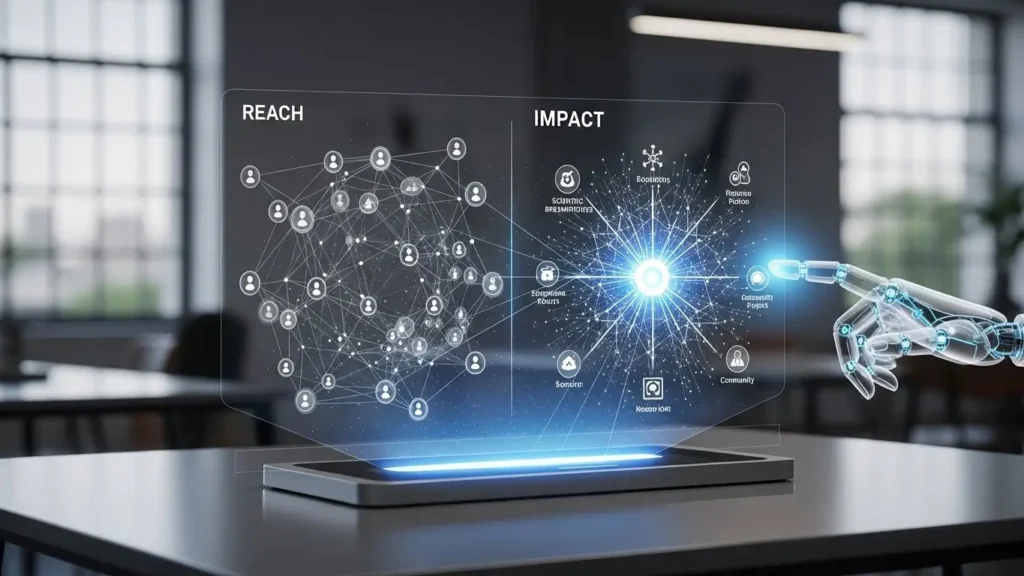
If you are looking to secure brand deals for creators 2026, you need to understand a fundamental shift in how companies measure ROI. For years, the industry was obsessed with “vanity metrics” follower counts and total likes. However, the influencer marketing 2026 landscape has matured. Brands have realized that a large following does not always equate to business impact.
The Decline of Follower Count as a Primary Metric
In the creator economy growth 2026, brands are prioritizing depth over breadth. They are investing heavily in ai-driven creator analytics to measure the true sentiment and engagement of an audience. When evaluating a partnership, a brand in 2026 is more interested in:
- Engagement Time: Are viewers staying to watch your content all the way through?
- Engagement Sentiment: Are the comments positive and do they show a genuine connection to the creator?
- Conversion History: Have you successfully driven actions in the past?
This shift is a blessing for micro-creators. If you have a small but fiercely loyal audience, you are often more valuable than a “mega-influencer” with millions of disengaged followers. AI creator trends in analytics now allow brands to see through the “slop” and find creators who truly move the needle.
Experiential and Multi-Dimensional Partnerships
Influencer marketing 2026 is also moving beyond the screen. We are seeing a massive rise in creator-led brands 2026 and experiential partnerships. Brands are no longer just asking for a “shoutout” in a video; they are inviting creators to speak at live events, co-create physical products and even design custom landing pages on the brand’s official website.
These “memorable experiences” are part of the broader creator trends list 2026. By building deeper, multi-dimensional connections with brands, you move from being a “vendor” to being a “partner.” This evolution is one of the most profitable ai creator trends, as it leads to longer-term contracts and higher rates that aren’t tied solely to the whims of an algorithm.
5. AI as the Engine, Not the Driver: Process Over Product
One of the most debated ai creator trends is the role of AI-generated content versus human-created content. There has been a lot of fear that ai avatar creators would eventually replace human influencers. However, the reality of 2026 is quite different.
The Rise and Fall of “AI Slop”
We are currently witnessing a backlash against “AI slop” low-quality, fully AI-generated content that lacks soul, nuance and a human element. While ai creator trends have made it easy to generate a video of an ai person talking, audiences have quickly become bored with it. In a world flooded with synthetic media, human authenticity is the new luxury.
This is why the most successful ai creator trends focus on the process rather than the final outcome. Brands are increasingly wary of fully AI-generated results, often implementing strict creator content ai ethics 2026 guidelines. They want to work with humans who use AI to work smarter, not humans who use AI to disappear.
Using AI to Enhance the Human Element
So, how should you be using AI creator trends? The “process-driven” approach means using tools for creators 2026 to:
- Refine Hooks and Scripts: Use ai to brainstorm 50 variations of a hook to see which one is most compelling, but write the actual script yourself.
- Accelerate Editing: Use ai video editors 2026 to remove filler words, add captions and color grade, but keep the creative “cut” human.
- AI Content Moderation: Use ai content detection creators and moderation tools to keep your community safe and healthy.
By focusing on ai creator trends that improve your efficiency, you can produce higher-quality human content at a faster pace. This “hybrid” approach is the gold standard for creator monetization strategies 2026. It allows you to maintain the trust and authority that only a human can provide, while leveraging the speed and power of modern technology.
As we look toward the final frontier of the creator economy 2026, we must address the most revolutionary shift of all: how your audience will actually find you. This brings us to the world of Generative Engine Optimization.
6. Generative Engine Optimization (GEO): The New Frontier of Discovery
Perhaps the most disruptive of all ai creator trends is the shift from traditional Search Engine Optimization (SEO) to Generative Engine Optimization (GEO). In the past, creators optimized for Google’s blue links or the YouTube search bar. In 2026, the primary discovery engine is shifting toward ai chatbots and generative search interfaces.
Discovery via AI Engines
Tools like ChatGPT, Perplexity and Google Search Generative Experience (SGE) are fundamentally changing how people find information and creators. Instead of typing “best travel vloggers,” users are asking, “Find me a travel creator who focuses on sustainable budget travel in Southeast Asia.” If your content isn’t visible to these ai creator trends in search engines, you are effectively invisible to a large segment of the market.
AI creator trends show that ai engines summarize content and recommend creators who provide direct, expert answers to specific queries. For instance, if you provide clear, authoritative advice on how to become a creator 2026, these engines are more likely to cite you as a primary source. This “citation discovery” is the new viral growth hack.
The Power of GEO Statistics
To understand the magnitude of this trend, look at recent data: Walmart recently reported that 20% of their measurable traffic now comes through GEO. This isn’t just a niche phenomenon; it is a pillar of creator economy growth 2026. By mastering ai creator trends related to GEO, you can supercharge your discoverability across best creator platforms 2026.
7. Optimizing for the AI Era: Your 2026 Action Plan
To thrive amidst these shifting ai creator trends, you need a tactical approach to how you structure your digital presence. It is no longer enough to just “make good content.” You must make content that is machine-readable and AI-friendly.
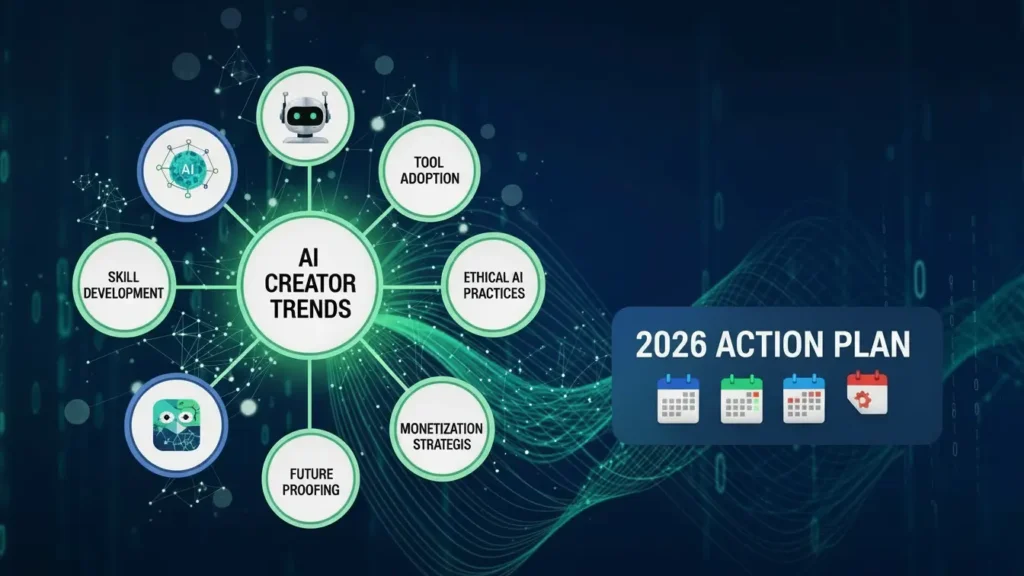
Consistent Terminology and Clarity
One of the most vital ai creator trends for optimization is the use of consistent terminology. Large Language Models (LLMs) weigh consistency heavily. If you are teaching someone about creator monetization models, don’t use ten different synonyms for “income.” Pick a term and stick to it. This helps the ai identify you as an authority on that specific subject.
Short Chunks and Direct Answers
AI models often struggle with “blurred” long-form text. To stay ahead of ai creator trends, write your video descriptions and captions in short, digestible chunks. Furthermore, provide direct and complete answers to commonly asked questions early in your content. This increases the likelihood that ai creator trends engines will pull your text as a “featured snippet” or a direct answer in a chatbot response.
Leveraging Specialized AI Tools
As you build your creator playbook 2026, you should integrate a variety of specialized tools:
- AI music for creators: Enhances the emotional resonance of your videos without copyright strikes.
- AI voice clones for creators: Allows for faster localized content creation and creator content recycling ai.
- AI script generators for creators: Helps in brainstorming short form video trends 2026 while maintaining your unique voice.
The Future of the Creator Economy: Predictions for 2026 and Beyond
AI creator trends shaping creator economy predictions for 2026 point to a major shift toward creator-first platforms and social commerce growth. The ecosystem is rapidly diversifying into specialized creator jobs in 2026, where professionals manage synthetic talent or operate dedicated creator AI agencies. This evolution reflects a move from individual creators to scalable, expertise-driven creator businesses built around AI-powered workflows.
We will see a rise in creator subscriptions 2026 as a response to fluctuating ad rates, leading many to search for patreon alternatives 2026 and explore subscription creator platforms 2026. Furthermore, creator audience building 2026 will rely on ai tools to grow audience 2026, focusing on deep creator community building 2026 rather than shallow follower counts.
Whether you are exploring creator marketing trends 2026, looking into creator grants 2026 or navigating creator economy legal issues 2026, the key to success is adaptability. The creators who win in 2026 will be those who embrace ai creator trends as a partner in their journey, not an obstacle to be feared.
FAQs:
Q1. How do AI creator trends affect small creators?
A: Small creators can leverage creator tools for small creators to compete with larger production houses. By using ai tools for instagram creators and ai tools for podcasters, you can maintain a high production value with minimal resources. Microcreator strategies 2026 focus on niche authority, which is highly rewarded by ai discovery engines.
Q2. What are the best creator platforms 2026 for monetization?
A: While YouTube remains a leader, emerging creator platforms 2026 are offering better creator economy platform payouts 2026. Many creators are looking at creator monetization apps 2026 that support creator retention strategies 2026 through direct fan support.
Q3. Will AI-generated video creators replace humans?
A: AI creator trends confirm that while AI-generated video creators and virtual influencers will continue to grow in 2026, human authenticity remains the most valuable currency. Brands still prioritize real human creators for creator partnerships in 2026 because trust, credibility and emotional connection cannot be fully replicated by AI-driven personas.
Q4. How can I protect my work from AI image copyright issues?
A: Staying informed about ai image copyright for creators and creator content ai ethics 2026 is essential. Always use tools for creators 2026 that have clear licensing terms and ensure your creator brand building 2026 is rooted in original creative thought.
Q5. What are the biggest creator economy challenges 2026?
A: AI creator trends reveal that the biggest challenges in 2026 include income stability within the creator economy, managing the affordability of creator tools and keeping pace with fast-moving TikTok trends. Long-term success will depend on implementing proven creator growth strategies in 2026 and committing to ongoing creator education to stay competitive as platforms and algorithms evolve.
6. How do I start as a creator in 2026?
A: AI creator trends show that learning how to become a creator in 2026 starts with choosing a niche you genuinely enjoy. From there, using a curated creator tools list for 2026 helps you select the right equipment and software without overwhelm. Finally, focusing on creator marketing in 2026 allows you to attract and nurture your first 1,000 true fans building a foundation for sustainable growth.