The professional world has undergone a seismic shift, and as we navigate the landscape of 2026 freelancing, the opportunities for independent professionals have never been more significant. If you are looking to quit your 9-to-5, start a side hustle, or build a scalable agency, you are entering the market at a pivotal moment. The goal of this guide is to move you from a state of uncertainty to a position of clarity, helping you build a high-value, sustainable career in the next 30 days.
To succeed in 2026 freelancing, you must understand that the “old way” of simply posting a resume is gone. Today’s market demands a blend of human creativity and technological fluency. Whether you are a seasoned professional or a student, the roadmap to earning your first $1,000 and eventually six figures is built on practical strategies, not shortcuts.
The State of the US Freelancing Market 2026
You might be asking: “Is the market too crowded? Has AI replaced the need for freelancers?” The short answer is no, but the nature of the work has evolved. While “saturation” is a common buzzword, the reality is that the US freelancing market in 2026 is expanding.
Market Growth and Opportunity
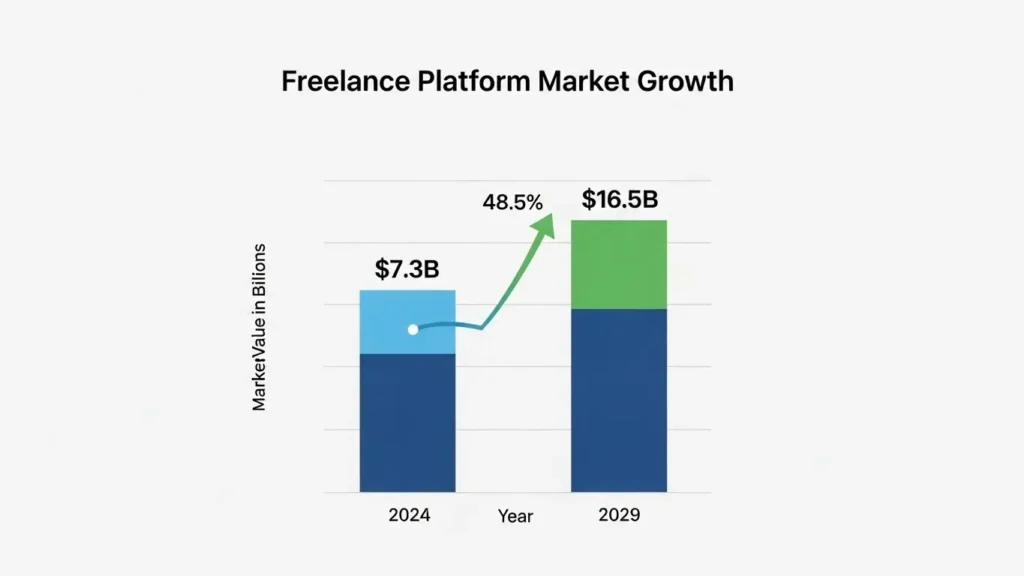
Currently, approximately 38% of the entire US workforce engages in some form of independent work. As we look toward the landscape of 2026 freelancing, platforms that were valued at $7.3 billion in 2024 are projected to skyrocket to $16.5 billion by 2029. This growth signals a fundamental shift in corporate behavior, as companies move away from the “long-term salary commitment” model and toward a distributed, flexible workforce.
| Metric | 2024 Benchmark | 2026 Projection/Status |
| Market Valuation | $7.3 Billion | ~ $11 Billion (Growing toward $16.5B) |
| US Workforce Participation | ~35% | 38% + |
| Hiring Trend | Fixed Full-Time | Flexible/Project-Based Specialists |
As of today, businesses are actively seeking editors, designers, marketers, and AI specialists who can deliver fast, specialized results without the overhead of a full-time employee.
AI Impact on Freelancing 2026
We cannot discuss 2026 freelancing without acknowledging Artificial Intelligence. There is a common fear that AI has “ruined” freelancing. However, as a mentor, I want to clarify: AI is not your enemy; it is your efficiency partner.

While basic manual skills like simple clip cutting or basic banner design are becoming commoditized, high-level strategy and human creativity are more valuable than ever. Freelancers who utilize AI to speed up workflows and automate mundane tasks are currently outperforming those who resist technology. According to the Microsoft Work Trend Index, the most successful independent workers in 2026 are those who possess “AI aptitude” alongside their core craft.
Navigating the Reality of Independent Work
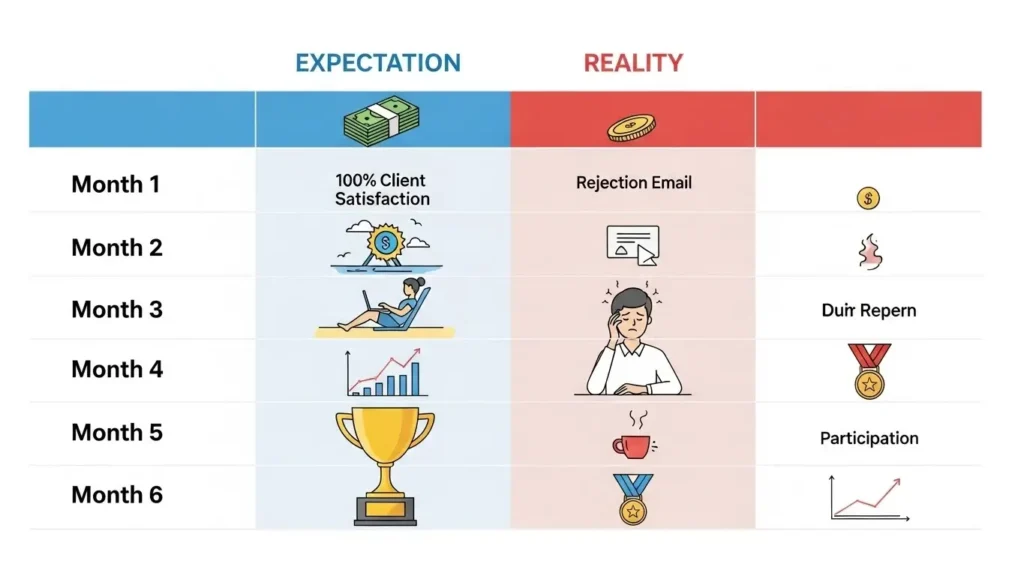
One of the biggest reasons beginners fail in 2026 freelancing is a misalignment of expectations. It is easy to watch a video and think you will be making thousands of dollars in your first month. Let’s set a realistic timeline for your journey.
The Realistic Growth Timeline
- Months 1–2 (The Foundation): This phase is for learning, positioning, and building your first samples. If you are exceptional, you might land one client, but your primary focus is “reps,” not revenue.
- Months 3–6 (The Momentum): You begin to find your rhythm. You may secure 3–5 clients and see meaningful side income. You aren’t full-time yet, but the proof of concept is there.
- Months 6–12 (The Transition): Consistency pays off. You have enough data to consider going full-time.
- Years 2–3 (The Scale): This is where you see real growth, higher rates, and better-quality clients.
The “Hard Things” No One Tells You
Being your own boss sounds like freedom, but in reality, it means you are the CEO, the Marketer, the Accountant, and the Delivery Specialist.
- Income Fluctuation: One month might be legendary; the next might be quiet.
- Rejection: You will likely face hundreds of “no’s” before your first “yes.”
- The ‘Elite Tier’ Principle: Within the landscape of 2026 Freelancing, the highest earners dominate the market by offering expertise that exceeds standard automation. To join this top bracket, you must provide specialized strategic value and creative insight that basic AI tools simply cannot replicate.
Step 1: Choosing Your Skill and Defining Your Offer
In 2026 freelancing, the “generalist” is struggling, while the “specialist” is thriving. When you start, you might be tempted to offer everything: graphic design, UI/UX, and video editing. This is a mistake.
From Skill to Service
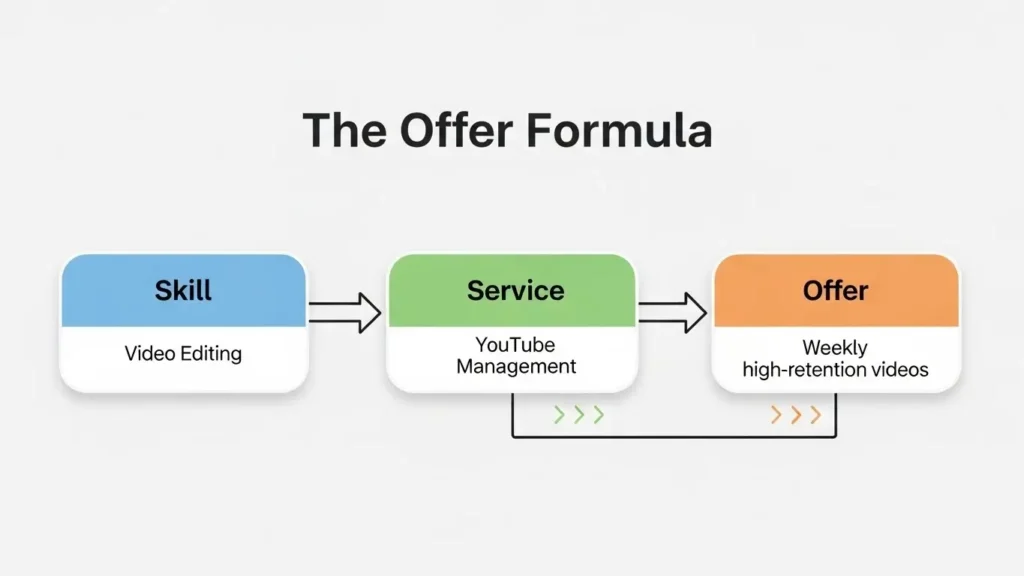
You must turn a generic skill into a specific Offer.
- Weak Offer: “I do video editing.”
- High-Impact Value Proposition: I specialize in high-retention video editing for creators, enabling a consistent weekly posting schedule while eliminating production-related burnout.’ This type of outcome-focused offer is essential for standing out in 2026 Freelancing.
By identifying a specific problem for a specific group (X does Y using Z), you immediately become more attractive to clients who have that exact pain point.
Top-Paying Freelance Specialization Trends 2026
Based on current demand, these areas are showing the highest ROI for new freelancers:
- Video Content: Short-form (Reels/TikTok) and high-retention YouTube editing.
- AI Implementation: Helping businesses integrate AI tools into their existing workflows.
- Strategic Technical Content: Bridge the gap between intricate technical data and accessible, human-centric narratives. This high-value skill is a cornerstone of 2026 freelancing, as businesses need experts who can distill complex systems into clear, actionable communication.
- Specialized Design: Brand identity that works across digital and physical spaces.
Step 2: Validating Demand in the Real World
Before you spend 40 hours building a profile on a platform, you need to know if people actually want what you are selling.
The “Local First” Strategy
A major “beginner unlock” is checking demand in your local community. If you cannot pitch your service to a local gym owner, cafe, or dentist in person, you will find it much harder to do so behind a screen.
- Action: Walk into local businesses. Ask if they need help with social media, content, or website updates. This builds your “sales muscle” and provides immediate feedback.
Online Market Research
Once you have local validation, move to the digital space. Study platforms like Upwork and Fiverr not just to post, but to research.
- What are top-rated sellers charging?
- What is their average delivery time?
- What are clients complaining about in the 1-star reviews of your competitors?
Establishing topical authority in your niche requires this deep dive. You aren’t just looking for a job; you are studying a market.
Step 3: Building a High-Converting Portfolio from Scratch
A common hurdle for beginners is the ‘no experience’ paradox: the idea that you need a portfolio to land clients, but you need clients to create a portfolio. In 2026 Freelancing, however, is a solved problem. Clients generally do not prioritize whether a project was paid or unpaid; they are primarily interested in your demonstrated ability to solve their specific challenges.
Creating “Ghost” Projects
If you have zero clients, you create three “sample projects” that mimic real-world demands.
- Identify Your Niche: If you chose video editing for YouTubers, find a popular creator’s raw footage (if available) or record your own and edit it to a high standard.
- Solve a Problem: Don’t just show a “finished product.” Show the “Before and After.”
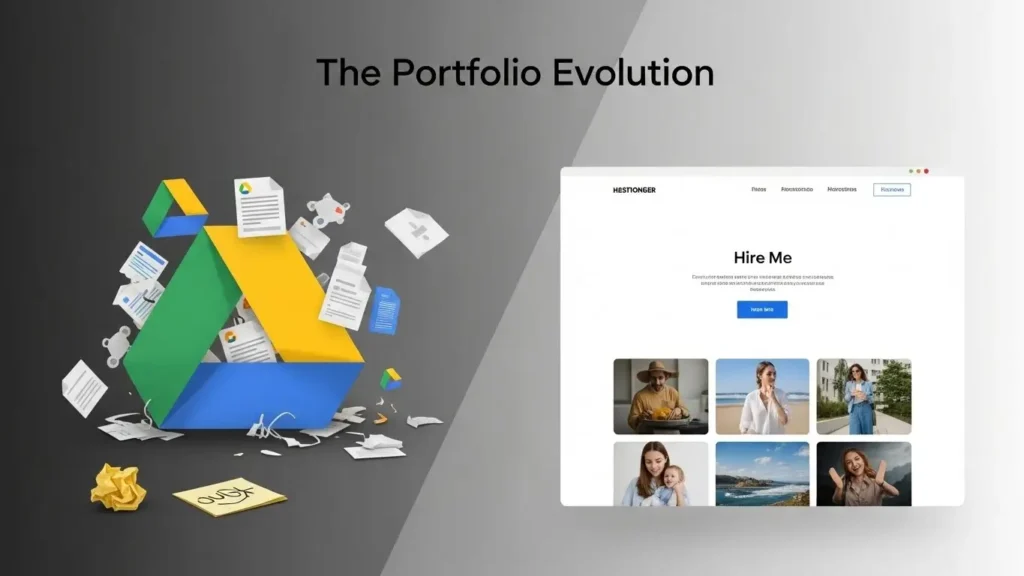
- The 3-Sample Rule: You only need three high-quality pieces. Dumping 50 mediocre links into a Google Drive is a freelance work automation impact mistake; it looks unprofessional and forces the client to do the work of filtering.
The Professional Website Advantage
While platforms like Fiverr and Upwork are great, a dedicated website is the “gold standard” for independent workforce trends 2026. According to the standards for the freelance economy in the US, your website should be clean and distraction-free to succeed in 2026 Freelancing. Using a builder like Hostinger is highly recommended because of its integrated AI website builder, which specifically caters to the AI-driven freelance work environment. This platform allows you to set up a professional site with a free domain and SSL in minutes.
Step 4: Mastering Freelance Rates Trends 2026 US
Pricing is often where beginners fail. They either price too low and burn out, or too high without the authority to back it up. In 2026 freelancing, your pricing must be a reflection of value, not just hours spent.

Identifying Your Unique Selling Proposition (USP)
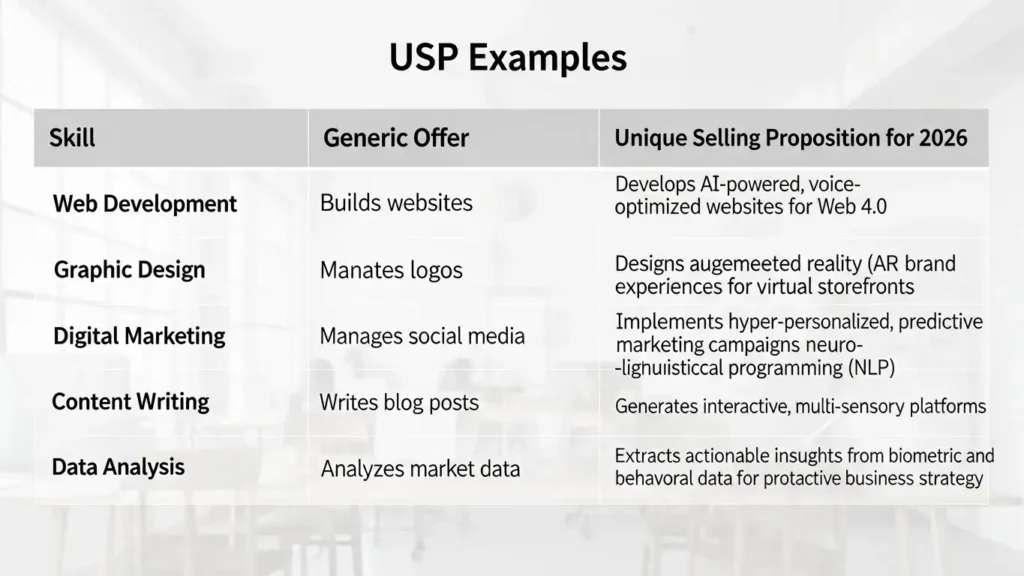
To command better hourly freelance rates in 2026, you need a reason for a client to choose you over a cheaper alternative. Your USP doesn’t need to be complex. For a beginner, it might be:
- Speed: 24-hour turnaround for first drafts.
- Progressive Satisfaction Guarantee: I provide continuous refinements to ensure every project aligns perfectly with your vision. This commitment to iterative quality is a powerful strategy for securing glowing testimonials during the early stages of 2026 freelancing.
- Specialization: I only edit finance videos for LinkedIn.
The Transition: From $5 to Premium
Starting at a lower price point is a valid strategy for building “social proof.” I personally began at $5 to secure those essential early reviews. To maintain your edge in 2026 freelancing, follow a progressive pricing model: implement a 10$ to 20$ rate hike for every 3$ to 5$ completed projects. This data-driven approach ensures your compensation keeps pace with your growing expertise and market demand.
Mentor Tip: You know it’s time to raise your rates when you have more work than you can handle, or when clients start sending you referrals without asking about the price.

Common Pricing Traps to Avoid
- The “Low Price Forever” Trap: If you stay cheap, you attract “nightmare” clients who demand the most for the least.
- The “Blind Copy” Trap: Don’t copy someone else’s price. Their cost of living and business overhead are different from yours.
- Ignoring Inflation: In a high inflation economy, your rates must account for the freelancing cost of living adjustment. If your software and rent go up, your rates must follow the Bureau of Labor Statistics.
Step 5: Dominating Freelance Platforms (Fiverr & Upwork)
Even with a personal website, freelancing in 2026 often begins on major marketplaces. These platforms act as search engines where clients are already “warm” and ready to buy.
Why Platforms Matter for Beginners
Platforms like Fiverr and Upwork manage the ‘complexities’ of the business, including payment protection, contracts, and dispute resolution. This support allows you to focus entirely on delivering high-quality services. To achieve success in 2026 Freelancing, you must master the platform’s algorithm by optimizing for relevant keywords and maintaining high responsiveness.
- Keywords: Your profile must be optimized for the best freelance skills for 2026.
- Responsiveness: In the remote freelancing jobs 2026 landscape, speed of communication is a ranking factor.
- Click-Through Rate (CTR): Your gig image or proposal headline must be more compelling than the ten others surrounding it.
Inbound vs. Outbound Lead Generation
- Inbound: When your profile ranks on the first page, and clients message you. This is the dream for freelancing as a primary income in 2026.
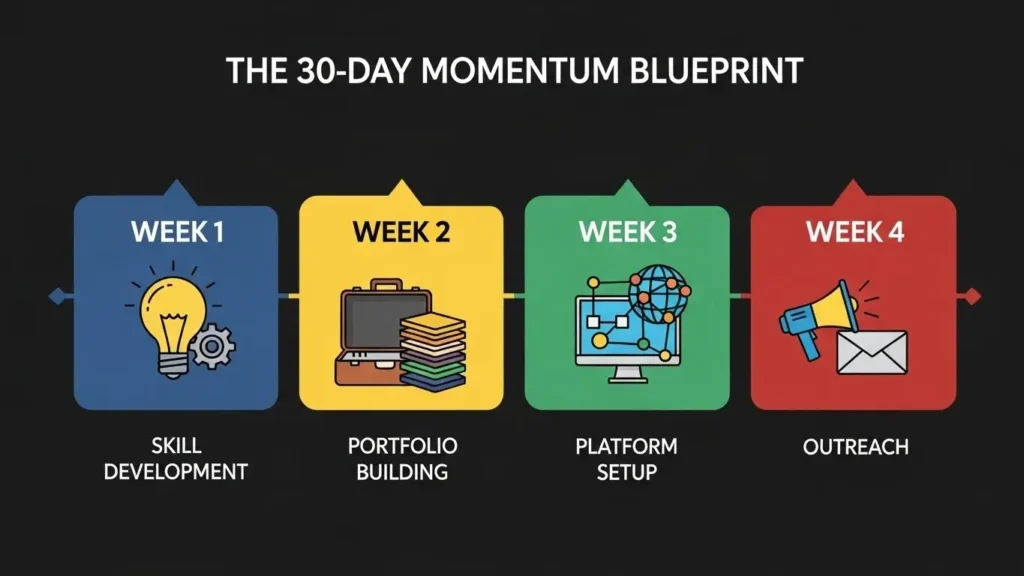
- Outbound: Actively sending 5–10 proposals daily on Upwork or cold-emailing local businesses. This is how you “force” momentum in your first 30 days.
Step 6: The “Internship First” Strategy
If you feel completely overwhelmed by how 2026 freelancing will change, there is a ‘cheat code’: work for someone else first. Even if it is an unpaid or low-stipend internship, one month of experience under an established freelancer or a small agency will teach you more than six months of tutorials.
What you learn in an internship:
- Workflow: How to structure files and manage deadlines.
- Client Communication: How to handle “difficult” feedback professionally.
- Deliverables: What a “pro-level” final product actually looks like.
This foundation is crucial for long-term freelancing career longevity and avoids 90% of the mistakes that lead to freelancing burnout trends 2026.
Building a Personal Brand: Your Safety Net in 2026
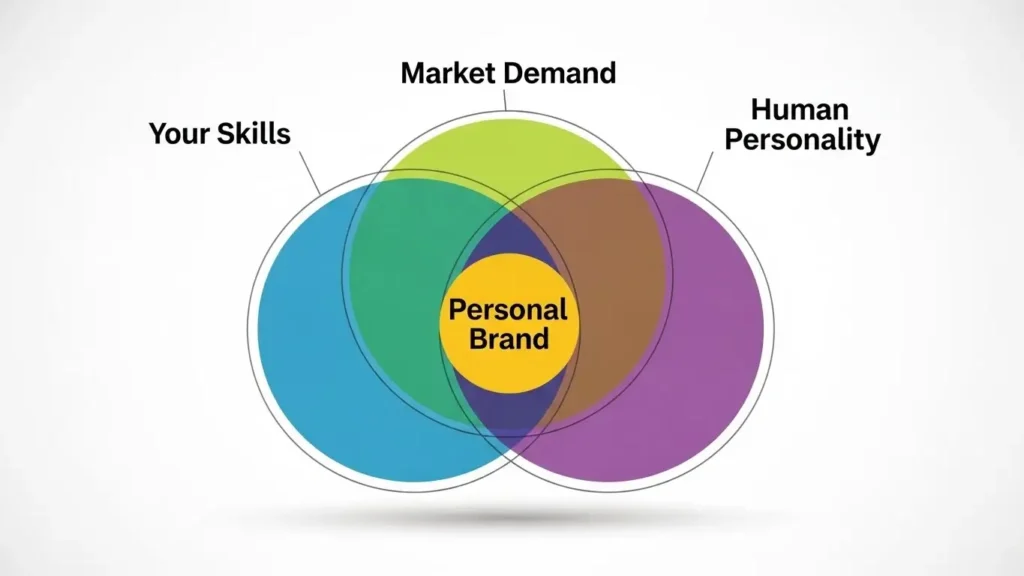
In the future of 2026 freelancing, your personal brand is your most valuable asset. It is the reputation that precedes you and the reason a client chooses you over an anonymous profile. Relying solely on a single platform like Fiverr or Upwork is risky; algorithms change, and accounts can be flagged. A personal brand ensures freelancing job security in 2026 by creating a direct line between you and your audience.
Why Branding is Mandatory for the Top 10%
The top 10% of freelancers earn the majority of the revenue because they aren’t just selling a service; they are selling trust. Your brand is comprised of:
- Your Voice: How you communicate with clarity and mentorship.
- Your Results: The tangible proof of the value you provide.
- Your Consistency: Showing up every week on platforms like LinkedIn, Instagram, or YouTube.
Even with just 500 engaged followers, a focused brand can generate more high-ticket leads than a profile with zero visibility on a crowded marketplace. This is the core of freelancing for US professionals 2026, shifting from chasing work to attracting it.
From Freelancer to Agency: Scaling Without Burnout
Most people remain stuck as solo freelancers because they never build systems. If you want to achieve freelancing sustainability long-term in the world of 2026 freelancing, you must eventually transition from ‘doing the work’ to ‘managing the results.
Step 1: Building Systems (Replacing Chaos with Order)
A business grows when systems replace manual effort. Start with:
- Standard Operating Procedures (SOPs): Onboarding messages, project checklists, and folder structures.
- Project Management: Use tools like Trello or Notion to track every stage of a project.
- Automation: Use freelancing and AI automation to handle administrative tasks like scheduling and invoicing.
Step 2: The Power of Retainers
One-off projects serve as the foundation, but retainers provide critical income stability in 2026 freelancing. Aim to convert every satisfied client into a monthly partner. Retainers reduce stress by allowing you to focus on quality results rather than the constant hunt for new work. Currently, many successful freelancers see 50% or more of their revenue generated by repeat, long-term clients.
Step 3: Diversifying Income Streams
Don’t let your income depend on one source. Consider:
- Service Work: High-ticket, one-on-one projects.
- Retainers: Predictable monthly income.
- Digital Products: Selling templates, packs, or courses based on your expertise.
- Consulting: Charging for your strategy rather than your labor.
The 30-Day 2026 Freelancing Action Plan
If you take only one thing from this guide, let it be this: action beats research every time. Follow this exact roadmap to go from zero to your first lead in 30 days.
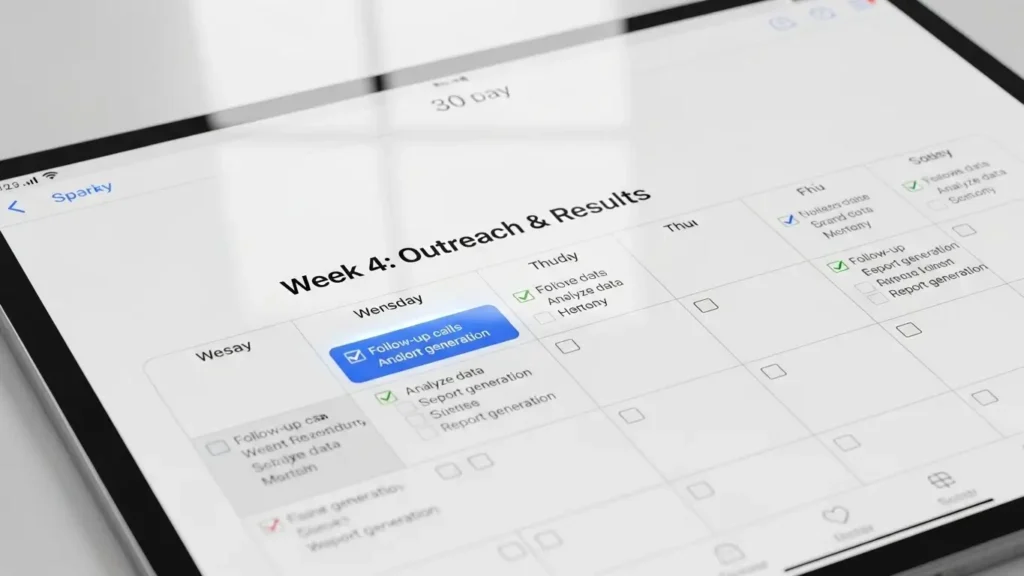
| Week | Focus | Core Goal |
| Week 1 | Skill & Fundamentals | Master the 20% of basics that drive 80% of results. Don’t get lost in “advanced” tricks. |
| Week 2 | Portfolio & Site | Create 2–3 clean samples and launch your Hostinger portfolio website. |
| Week 3 | Platform Setup | Optimize your Fiverr and Upwork profiles with high-intent keywords. |
| Week 4 | The Outreach Blitz | Send 5–10 proposals daily and pitch to local businesses in person. |
By the end of Day 30, you won’t be a “wannabe” freelancer; you will be an active participant in the US freelancing market 2026.
The 5-Year Career Longevity Roadmap
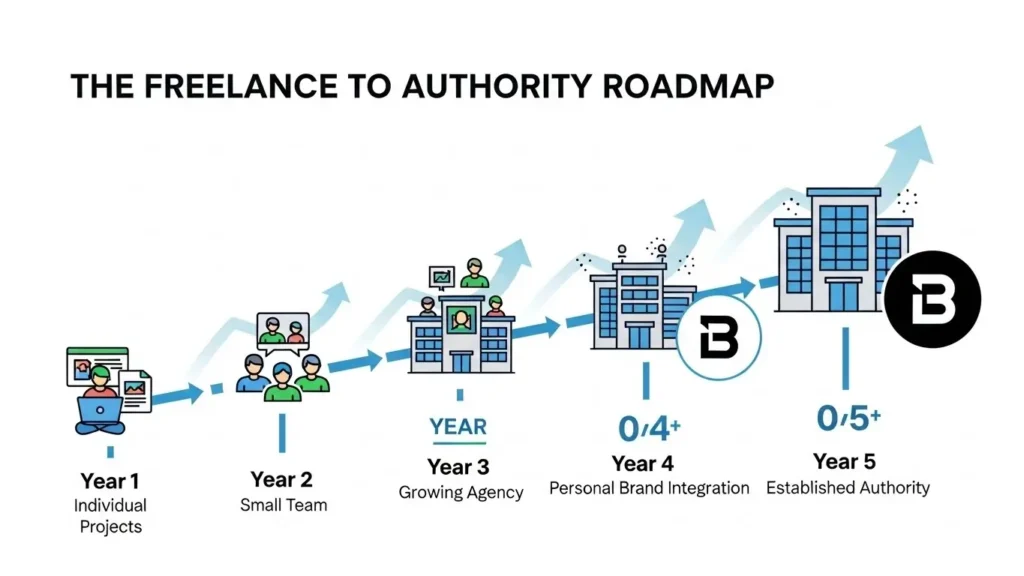
Freelancing is a marathon, not a sprint. Here is a realistic freelance career outlook for 2026 and beyond:
- Year 1 (The Foundation): Focus on learning, making mistakes, and building your first set of reviews.
- Years 2–3 (The Growth): Specialize in a niche, raise your rates, and start building a personal brand. This is when you often transition to an agency model.
- Year 5 (The Authority): You are a trusted expert. You choose your clients, command premium prices, and potentially have a team handling the day-to-day operations.
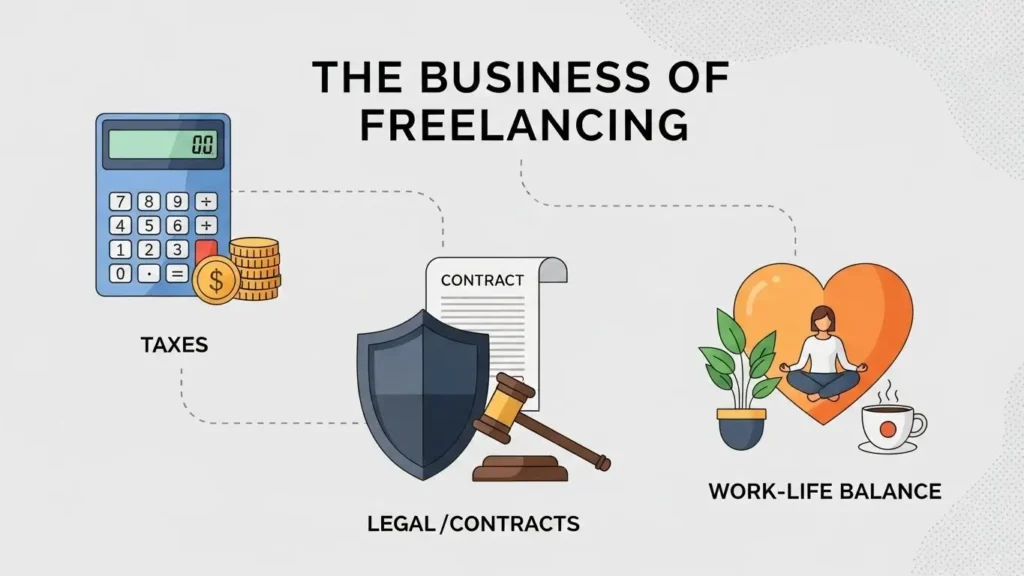
Navigating the Business Side: Taxes, Legal, and Benefits
To truly “win and not fail,” you must treat your freelance career as a legal entity. Especially in the US freelancing market in 2026, staying compliant is key to long-term success.
Freelancing Taxes Outlook 2026 US
As an independent worker, you are responsible for self-employment taxes. As of 2026, it is recommended to set aside 25-30% of every payment for tax obligations at IRS.gov. Keep detailed records of your business expenses, such as software like Hostinger, AI tool subscriptions, and home office equipment, to utilize deductions during the freelance tax changes 2026.
Health and Retirement
Transitioning to freelancing as a primary income in 2026 means managing your own benefits. Evaluate the benefits of utilizing high-deductible health plans (HDHPs) in conjunction with Health Savings Accounts (HSAs). This financial strategy is a vital component of a sustainable long-term plan in 2026 freelancing, allowing you to manage medical costs while building a tax-advantaged nest egg. For retirement, a SEP-IRA or Solo 401(k) remains a powerful way for US freelancers to save while reducing taxable income U.S. Department of Labor.
FAQs:
Q1. Is freelancing worth it in 2026 with the AI boom?
A: While AI excels at automating repetitive tasks, the demand for human strategy, creativity, and ‘AI-augmented’ execution is reaching an all-time high in the world of 2026 Freelancing. Clients increasingly prioritize professionals who can leverage these tools to enhance their output while maintaining a uniquely human perspective.
Q2. What skills do freelancers need in 2026 to stay relevant?
A: Specialization is essential for success in 2026 Freelancing. Currently, high-retention video editing, AI implementation strategy, and niche technical writing are experiencing high demand as businesses seek targeted expertise over generalist services.
Q3. Will AI replace freelancers in 2026?
A: AI replaces specific tasks rather than entire professionals. In the landscape of 2026 Freelancing, those who utilize AI as a strategic partner will thrive, while those who ignore its potential will likely struggle to maintain relevance.
Q4. How do I handle freelancing during economic uncertainty in 2026?
A: Focus on ROI-driven services. If your work consistently helps a business reduce costs or generate revenue, you will remain ‘recession-proof’ in the landscape of 2026 Freelancing.
Q5. How much should I charge for hourly freelance rates in 2026?
A: While rates vary significantly by niche, entry-level specialists in the US typically start between $25 and $50 per hour. In the competitive landscape of 2026 Freelancing, authority-level experts frequently command rates of $150 per hour or more.
Q6. Is freelancing vs. full-time 2026 a better choice?
A: Deciding between traditional employment and independent work depends largely on your risk tolerance. While 2026 Freelancing offers significantly higher earning potential and greater flexibility, it lacks the traditional ‘safety net’ often provided by corporate employment.
Q7. How do I get my first client with no experience?
A: To begin your journey in 2026 freelancing, start with an internship, work for a local business at a low cost to secure reviews, or create ‘ghost projects’ to build a professional portfolio.
Q8. Can I do freelancing for Gen Z 2026 or millennials?
A: Absolutely; younger generations are driving the ‘passion economy.’ As a result, there is a high demand for content creators and digital managers within these demographics in the landscape of 2026 Freelancing.
Q9. What are the biggest freelancing burnout trends in 2026?
A: Burnout often stems from ‘client chasing’ and a lack of effective systems. Building retainers and utilizing automation tools is the essential cure for maintaining your health and productivity in 2026 Freelancing.
Q10. How do I manage freelancing work-life balance in 2026?
A: To maintain a healthy work-life balance in 2026 freelancing, set strict office hours, use a dedicated workspace, and learn to say ‘no’ to projects that do not align with your long-term goals.