
In January 2026, Google officially launched a feature that many are calling the “holy grail” of productivity, fundamentally driven by Google Personal Intelligence. For those seeking to understand this breakthrough, it is best described as a personal intelligence engine that sits atop the Gemini model. This system allows Google Personal Intelligence to “know” you by reading your emails, scanning your calendar, and even analyzing the photos you’ve taken over the years. This isn’t just a minor patch; it is a foundational change in the personal intelligence technology sector that moves us closer to a world where our devices anticipate our needs before we even voice them.

How Google Personal Intelligence Works: The Engine of Context
When exploring how google personal intelligence works, one must look at what engineers call the “context packing” problem. Traditionally, providing an AI with enough personal context to be useful required massive amounts of manual input. You had to tell the AI you were a vegetarian, that you had a flight at 4 PM, and that you preferred boutique hotels.
With AI personal intelligence systems, manual labor is eliminated. Google’s personal intelligence engine fetches relevant facts from your connected apps on demand. It doesn’t just store a giant copy of your data in the AI; instead, it retrieves specific data points like a receipt from Gmail or an appointment from Calendar only when a query requires it. This real-time reasoning over massive datasets is what allows for such high-quality, tailored answers.
Key Components of the Personal Intelligence Engine

To understand google artificial intelligence innovations, it is helpful to see the architecture behind this system:
| Component | Function | Data Source |
| Data Fetcher | Retrieves specific relevant facts in real time. | Gmail, Photos, Drive |
| Context Packer | Organizes retrieved data for the AI model. | Metadata, Text, Images |
| Reasoning Layer | Connects the dots between different data points. | Gemini 1.5/2.0 Models |
| Privacy Filter | Sanitizes inputs and ensures “opt-in” compliance. | User Settings |
The Transformation of Personal AI Assistant Technology
For years, the intelligent personal assistant AI market was dominated by voice commands that could do little more than set timers or play music. The introduction of Gemini-driven features represents a leap in Google’s machine learning personal assistant capabilities. We are seeing a transition from “reactive” assistants to “proactive” ones.

As part of these personalized AI technology trends, Google Personal Intelligence has focused on making Gemini an “agent” rather than just a “chatbot.” An agent powered by Google Personal Intelligence has the agency to operate across your services. For instance, if you ask for help with a “tire shop” recommendation, the AI doesn’t just look for local businesses on a map. It can cross-reference your Google Photos to see what kind of vehicle you drive and your Gmail to see if you have any upcoming road trip plans.
Real-World Applications: The Oklahoma Road Trip Example
One of the most cited examples of Google AI assistant capabilities involves Josh Woodward, a VP at Google Labs. While at a tire shop, he didn’t have to provide his car’s specs. Gemini:
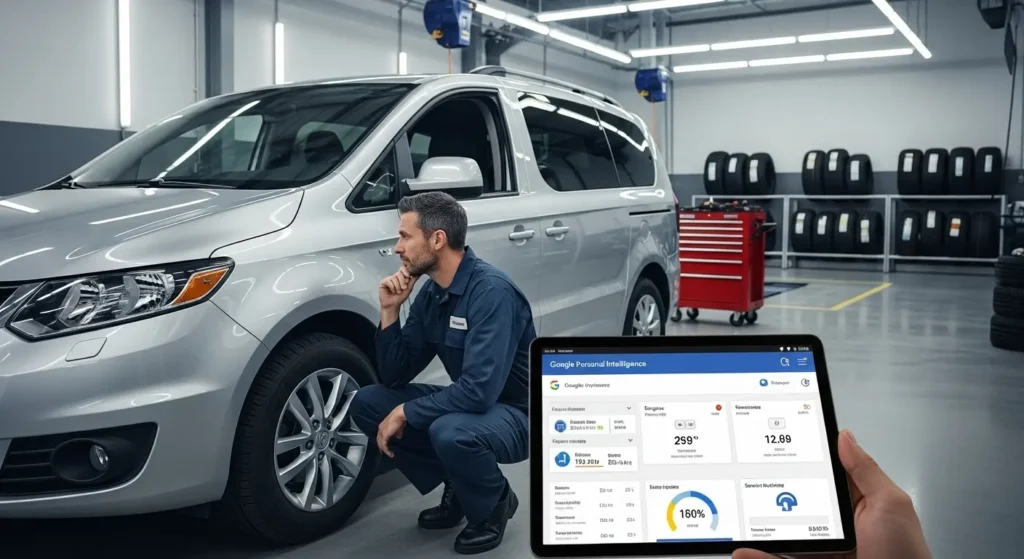
- Analyzed Photos: Identified his van’s make and model from previous images.
- Scanned Gmail: Found mentions of an upcoming family road trip to Oklahoma.
- Cross-Referenced Maps: Checked typical weather patterns for that route.
- Delivered Recommendations: Suggested all-weather tires specifically suited for his specific trip and vehicle.
This is a prime example of personal intelligence AI applications. The assistant didn’t just search the web; it searched his world to provide a solution that no generic search engine could replicate.
Learning Through Interaction: How AI Personal Assistants Learn
A common question among early adopters is how AI personal assistants learn without compromising security. Google insists that the underlying Gemini model is not “trained” on your raw Gmail or Photos data. Instead, it utilizes Google contextual AI understanding to interpret queries.

In the debate of Google Personal Intelligence vs artificial intelligence, the former relies on private “retrieval-augmented generation” (RAG). This means Google Personal Intelligence uses your data as a temporary reference book to answer a specific question, rather than absorbing your secrets into its permanent “brain.”

This distinction is critical for maintaining AI personal assistant benefits while mitigating the risks of data leakage. By utilizing this method, Google Personal Intelligence ensures that your sensitive information remains segmented from the global training models.
The Evolution of Predictive Tech
The Google predictive intelligence technology being deployed here aims to reduce “prompt fatigue.” In the past, you might have had to say, “Remember, I like modern art,” every time you asked for travel tips. Now, the personal AI technology evolution allows the system to infer these preferences from your past behaviors, such as the museums you’ve checked into on Maps or the art newsletters you subscribe to in Gmail.

Security and the “Privacy Elephant”
We cannot discuss what personal intelligence agents are without addressing the massive privacy implications. For many, the idea of an AI “reading” every email is terrifying. However, Google is leaning into Google AI assistant future trends by making the entire system strictly opt-in.
When you activate these personal intelligence platform features, you have granular control. You can:
- Link Gmail and Calendar, but keep Google Photos private.
- Disconnect any app at any time.
- Review which data points were used to generate a specific answer.
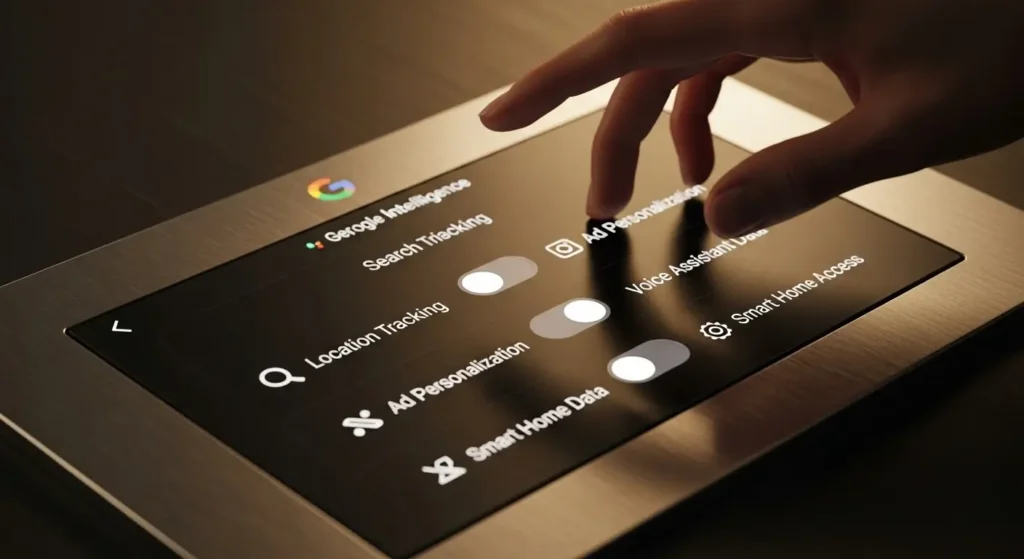
This AI-driven personal assistance model is designed to provide Google intelligent user experiences without the “all-or-nothing” data sharing of previous eras. However, the personal intelligence data privacy conversation is just beginning. Even with a “privacy-first” approach, the consolidation of so much personal context into a single AI interface remains a point of contention for security experts.
Privacy Safeguards and User Control
To bolster AI personal assistant security, Google has implemented several hard-coded boundaries:

- No Proactive Assumptions: The AI won’t comment on health or finances unless specifically asked.
- Sanitized Prompts: Queries are stripped of PII (Personally Identifiable Information) before processing.
- Geographic Restrictions: Due to strict laws like GDPR, this feature is currently limited to the US.
- Account Segregation: Workspace and education accounts are currently excluded from these features to maintain institutional security.
This Google Personal Intelligence privacy-first AI development strategy is a calculated move to build trust. In a world where personal intelligence user control is the primary currency, Google knows that one major data leak could destroy the reputation of its most ambitious project to date.

By prioritizing security within the Google Personal Intelligence framework, the company aims to ensure that user data remains protected even as the AI becomes more deeply integrated into daily life. This commitment to safety is a central pillar of the Google Personal Intelligence rollout, ensuring that the transition to advanced digital agents is both helpful and secure.
The Future of Contextual Understanding
The goal of AI-powered user context understanding is to make the technology disappear. We are moving toward a future where “searching” is replaced by “asking.” The Google intelligent assistant growth trajectory suggests that within a few years, we won’t distinguish between our personal data and the internet.

As we look at the personal intelligence market impact, it’s clear that the AI personal assistant competitive landscape is heating up. While Apple emphasizes “on-device” processing, Google is betting on its massive cloud infrastructure and the existing “dots” of your digital life to provide a superior, more knowledgeable experience.
The arrival of Google Personal Intelligence marks a transformative era in digital management, moving far beyond the limitations of generic automated responses. By exploring sophisticated personalization strategies, we can see how Gemini successfully merges worldwide data with your specific life context to create a seamless, individualized user experience. This leap into anticipatory computing allows Google to recognize user intent proactively, ensuring that relevant help is often prepared before you even begin to type.
Redefining the Daily Workflow
The most immediate personal intelligence impact on work and home life is the reduction of “context switching.” Traditionally, if you wanted to plan a meeting, you had to check your calendar, open your email to find a specific thread, and perhaps consult a spreadsheet for project details. Current AI assistant technology trends 2025 and 2026 suggest that these silos are finally breaking down.

The implementation of Google Personal Intelligence turns Gemini into a unified command center, effectively bridging the gaps between your various digital tasks. If you were to ask for the best time to discuss a project budget, the AI doesn’t just look at your Calendar; it simultaneously scans your Gmail and Drive to locate relevant files and previous discussions.

This ensures you don’t just get a time slot, you get the full context needed to walk into that meeting fully prepared. By streamlining how information is retrieved across your ecosystem, Google Personal Intelligence ensures that every interaction is informed by your specific data history, making your digital assistant a true extension of your own memory.
Beyond Generic Travel Lists: A New Standard
Travel planning has undergone a radical transformation. Generic AI often provides “top 10” lists found on any travel blog. However, the personal intelligence technology in Gemini analyzes your past trips, the boutique hotels you preferred in Paris, or the specific types of hiking trails you tagged in Photos.

By merging disparate data points into a cohesive whole, Google Personal Intelligence generates bespoke itineraries that emphasize personal significance over mere speed. This technological progression is fundamentally altering professional landscapes, as seen in the Google Personal Intelligence job market impact.

With AI now managing the intricate logistical details of scheduling and travel, human assistants and agents are increasingly focusing on strategic, high-level decision-making that requires emotional intelligence and complex judgment.
The Power of AI-Powered Workflow Optimization
For professionals, AI-powered workflow optimization is the primary value proposition of this update. Imagine needing a license plate number for a parking app. Instead of scrolling through thousands of photos, you simply ask. Gemini identifies the specific image, extracts the seven-digit alphanumeric code, and presents it to you.

These Google Personal Intelligence context-aware AI systems represent a fundamental change in data retrieval. Instead of navigating folders, we are now navigating by concept and memory. This has led to a surge in personal AI adoption rates among power users who find that the “time-to-answer” is slashed by 80% compared to manual searches.

By utilizing Google Personal Intelligence, users can bypass traditional directory structures entirely, relying instead on the AI’s ability to index and retrieve information based on intent. This evolution in how we interact with our digital archives is a core benefit of the Google Personal Intelligence framework, making information more accessible than ever before.
The “Scary Amount” of Knowledge: Utility vs. Intrusiveness
During a recent presentation, a Google Labs VP noted that Gemini “already knows a scary amount about you.” While this phrase might cause concern, it highlights the intelligent personal assistant future where context is king. The system no longer needs you to provide lengthy prompts like, “I was in Paris two years ago, and I like modern art.” It already has that history.

This level of Google multimodal AI technology, the ability to see patterns in your emails, images, and videos simultaneously, is what sets Google apart. However, the personal intelligence economic impact of this shift is still being calculated, as businesses determine how to integrate these consumer-grade tools into corporate environments without risking proprietary data.
Proactive Suggestions and “Context Answers”
In previous years, one of the most significant constraints of AI technology was its strictly reactive nature; it essentially sat idle until a user provided a specific command. Google Personal Intelligence fundamentally disrupts this pattern by introducing the era of “Context Answers.”

Instead of waiting for a manual prompt, the system utilizes your integrated ecosystem to offer proactive insights that align with your current needs and future schedule. This shift from reactive searching to anticipatory assistance is a hallmark of how Google Personal Intelligence redefines the relationship between a user and their digital data.
If you have a flight confirmation in your Gmail, Gemini doesn’t wait for you to ask for a status update. It can proactively:
- Generate a Packing List: Based on the weather at your destination (retrieved from Google Search) and your typical travel gear (found in Photos).
- Coordinate Ground Transport: Suggesting a ride-share booking based on your calendar’s “land” time and current traffic data from Google Maps.
- Suggest Local Favorites: Recommending restaurants that match your reviews of similar places in your home city.

This integration is a hallmark of Google AI integration workplace strategies, where the AI acts as a junior partner that handles the “pre-work” of your life.
The Technical Reality of Data Security
Despite the high level of access, Google Personal Intelligence data security remains a top priority. As users ask what personal AI assistants are, they must understand that the “personal intelligence engine” is a sandboxed environment.
Your raw files aren’t being tossed into a giant public training bucket. Instead, Google Personal Intelligence ensures that its intelligent recommendation systems use temporary “inference windows” to look at your data, solve the problem, and then close the connection. This ephemeral processing model is a cornerstone of how Google Personal Intelligence maintains strict privacy while delivering highly tailored results.

This addresses one of the primary personal intelligence technology challenges: maintaining a “state” for the user without violating long-term privacy. It is a delicate balance between AI assistant business applications and individual consumer rights.
The Evolution of Search: Google Personalized Search Intelligence
The way we use Google Search is also being redefined through Google’s personalized search intelligence. We are moving away from keyword-based searches toward intent-based inquiries.
| Feature | Old Search (Keyword) | New Search (Personal Intelligence) |
| Input | “Best restaurants in New York” | “Where should I eat tonight?” |
| Context | Global popularity | Your past reviews + Current Location + Calendar availability |
| Output | List of links | Specific recommendations with “Why” (e.g., “Because you liked the bistro in Seattle”) |
This evolution is driving personal intelligence skills automation, where the manual task of filtering search results is becoming obsolete. Users are now focusing on the AI-driven personal productivity tools that help them execute their plans rather than just making them.
Anticipatory Computing: The Next Frontier
Google is betting heavily on anticipatory computing. This is the idea that your device should be one step ahead of you. If it sees you’ve received a receipt for a new tech gadget, it might suggest watching a “Getting Started” video on YouTube or creating a “Product Registration” reminder in your Task list.
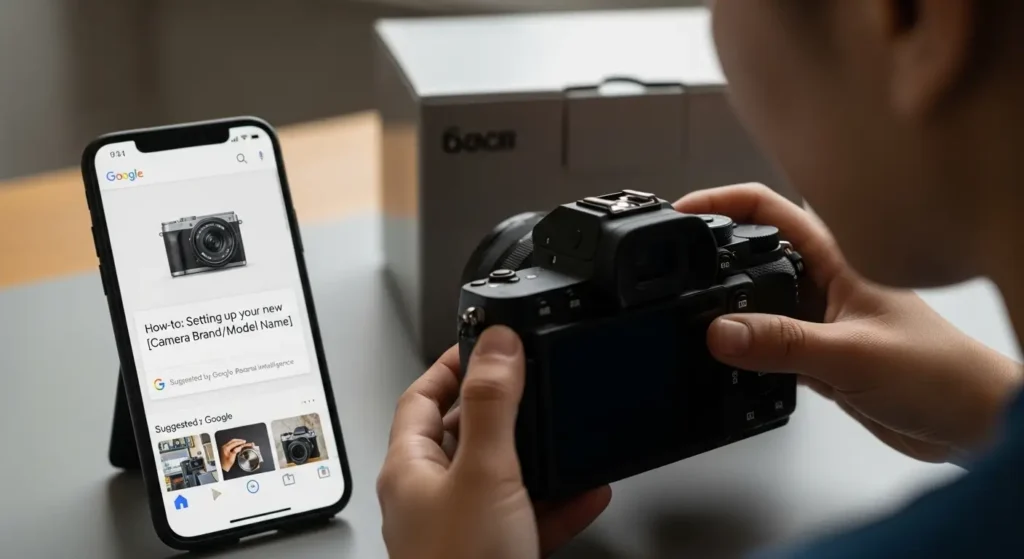
This creates a high level of AI personal assistant accuracy because the suggestions provided by Google Personal Intelligence are based on verifiable events in your life, not just statistical guesses.

It is the pinnacle of google ambient intelligence technology, where the AI is present but unobtrusive, only speaking up when it has something truly valuable to contribute. Through this integration, Google Personal Intelligence ensures that every notification or suggestion is contextually relevant, reducing digital noise while maximizing the utility of your personal data ecosystem.
Transforming the Workforce
The personal intelligence workforce transformation is already visible in how teams handle information. Instead of asking a colleague, “Where is that PDF from last month?” you ask Gemini. This shift requires new AI assistant implementation strategies at the enterprise level, although currently, Google has focused these features on consumer accounts.

By leveraging google cognitive AI capabilities, users are essentially gaining an “external brain.” This improved personal intelligence user experience allows for higher-order thinking. When you aren’t bogged down by finding license plate numbers or reservation codes, you have more mental bandwidth for creative and complex problem-solving.
Decision Support Systems
We are also seeing the rise of AI-powered decision support systems. If you are looking to buy a gift, Gemini can recall a partner’s wish list buried in an old email or a photo of a store window you took months ago. By providing Google’s intelligent information retrieval, the AI acts as a memory aid that never forgets.

This contributes to the rapid personal intelligence market growth, as users realize that the value of an assistant is proportional to how much it understands about their unique life circumstances. The AI personal assistant customization options in the Gemini settings are the knobs and dials that let you tune this experience to your comfort level.
Contextual Awareness and the Path Forward
As we analyze google contextual awareness technology, it becomes clear that the “intelligence” isn’t just in the Large Language Model (LLM). It is in the integration. The personal intelligence industry adoption will depend on how well these integrations work across non-Google platforms in the future.
For now, the AI assistant training methods focused on retrieval-augmented generation are proving to be the safest and most effective way to deliver these features. We are seeing Google intelligent automation trends that prioritize user consent and data transparency, which is a significant shift from the “data-scraping” reputation of the early 2000s.
Finally, a personal intelligence ROI analysis for the average user reveals that the time saved on administrative tasks can equal several hours per week. This makes AI-driven task management systems not just a luxury but a necessity for the modern digital professional.
As we approach the final frontier of the digital age, the debut of Google Personal Intelligence represents a definitive shift in the power dynamic between users and their data. While the convenience of a truly individualized assistant is undeniable, the underlying Google personalization algorithms that power this experience raise significant questions about the nature of privacy in 2026. To fully understand the landscape, we must look beyond the glossy interface and examine the personal intelligence enterprise solutions and individual ethical dilemmas that will define the next decade of human-computer interaction.
The 9 Shocking Privacy Truths of Google Personal Intelligence
The “primary authority” for this shift, Google emphasizes that while the system is “opt-in,” the sheer depth of integration is unprecedented. Here are the nine core truths every user needs to understand about the current state of AI assistant integration challenges and privacy.

- The “Scary Amount” Clause: As noted by Google executives, the AI already knows a “scary amount” about you because it has been sitting on your data for years. This update simply gives that data a voice.
- Context Persistence: Even if you delete a specific email, the Google intelligent content curation might have already indexed the intent of that message into your personal context profile.
- The Regulatory Gap: Google has limited this launch to the US because European and UK privacy laws (like GDPR) make this level of data cross-referencing legally precarious.
- Sanitized, Not Secret: While your raw files aren’t used for training, “sanitized prompts” are. This means the way you interact with your personal data helps Google refine its broader models.
- Over-Personalization Risks: The system may draw incorrect conclusions, assuming a medical condition from a single search or a lifestyle choice from a background photo.
- The “One Account” Vulnerability: Linking your entire ecosystem creates a single point of failure. If your Google account is compromised, the bad actor doesn’t just get your emails; they get a curated summary of your entire life.
- Proactive Inference: The AI isn’t just waiting for you to ask; it is constantly performing Google predictive user modeling to suggest your next move.
- Shadow Indexing: Even with personal intelligence accessibility features turned on, the system is performing background processing that users rarely see in real-time.
- The De-Facto Standard: As more users opt in, the “privacy-focused” alternative becomes less functional, effectively forcing a choice between utility and anonymity.
The AI Race: Competitive Advantage in a Data-Driven World
The rollout of Google Personal Intelligence is not happening in a vacuum. It is a strategic power move in the global AI race. By leveraging its vast user data, Google has secured a personal intelligence competitive advantage that few can match.

While competitors struggle with AI personal assistant effectiveness, Google’s advantage lies in its “dots,” the millions of interconnected data points across Maps, YouTube, and Gmail. Microsoft and Apple are attempting to counter with their own Google adaptive AI interfaces and on-device processing, but the sheer scale of Google’s cloud-based personal intelligence remains the benchmark for AI-powered knowledge management.
The Shift in Professional Standards
For many, this technology is sparking a need for personal intelligence professional development. We are seeing a shift where personal intelligence skill requirements now include “AI orchestration,” the ability to manage and audit the digital agents that represent us.

In the corporate world, Google’s intelligent scheduling systems are becoming the norm, leading to a new set of AI assistant performance metrics. Managers no longer just look at output; they look at how effectively an employee uses their Google personalized AI experiences to streamline administrative burdens.
Ethical Boundaries and the Future of Machine Intelligence
As we track the Google machine intelligence evolution, the ethical considerations become more complex. How do we measure the AI-driven personalization benefits against the loss of digital autonomy?

Experts are now developing personal intelligence measurement methods to determine if these systems are truly helping or if they are simply creating “filter bubbles” for our own lives. The risk of google intelligent user profiling is that the AI might pigeonhole a user based on their past, making it harder to break out of old habits or explore new interests.
Implementation and Scalability
The personal intelligence implementation costs for Google are massive, requiring billions in infrastructure to handle real-time reasoning over trillions of personal data points. However, the personal intelligence scalability solutions they’ve developed, specifically the “Personal Intelligence Engine,” allow for Google’s intelligent data processing at a speed that was unthinkable just 24 months ago.

The AI assistant user adoption factors suggest that convenience almost always wins over privacy concerns. As AI-powered communication enhancement makes our emails more concise and our calendars more organized, the friction of daily life begins to evaporate.
The Impact on Organizations
The AI assistant’s organizational impact on personal intelligence is profound. While currently focused on consumer accounts, the roadmap for personal intelligence training programs in the workplace is already being drawn. Companies are looking at how google intelligent search personalization can be applied to internal wikis and project management tools.

| Sector | Impact of Personal Intelligence | Key Benefit |
| Healthcare | Symptom tracking via photos/emails | Faster diagnosis signals |
| Finance | Spending pattern analysis from receipts | Automated budgeting |
| Education | Personalized learning paths from Drive docs | Custom study guides |
| Travel | Itinerary management across Gmail/Maps | Zero-friction logistics |
Final Thoughts: The Bottom Line
Google Personal Intelligence is a bold, perhaps even risky, leap into a future where our assistants know us better than we know ourselves. It promises a world of Google intelligent search personalization where the barrier between thought and action is removed.

However, as we embrace these AI-driven personalization benefits, we must remain vigilant. The “currency” of the next decade is trust. Google is betting that by giving users control and emphasizing security, it can become the primary custodian of our digital lives. Whether this excites you as a productivity revolution or alarms you as a privacy nightmare, one thing is certain: the era of the generic AI is over. The era of the Google Personal Intelligence agent has begun.
FAQs:
Q1: Why is Google Personal Intelligence only in the US?
A: Stricter privacy regulations in Europe (GDPR) and other regions create legal hurdles for AI systems that cross-reference multiple types of personal data, such as emails and location history.
Q2: Can I “un-train” the AI on my data?
A: While the core model isn’t trained on your raw data, you can delete your activity and revoke app permissions, which effectively removes that context from the AI’s immediate reasoning engine.
Q3: Is there a risk of the AI being “too” personal?
A: Yes, a phenomenon known as over-personalization occurs when the AI makes assumptions about your health, finances, or relationships based on patterns it sees in your data.
Q4: Will this feature eventually come to business accounts?
A: Google is currently testing these features on consumer accounts first. Enterprise and Workspace accounts require higher levels of data segregation and security audits before a rollout can occur.
Q5: What is the main difference between Google’s AI and Apple’s?
A: Apple emphasizes “on-device” processing for privacy, while Google leverages its massive cloud ecosystem and existing integration across Gmail, Maps, and YouTube to provide deeper contextual understanding.