

The conventional path to scaling revenue is expensive, demanding a continuous investment in hiring and operational overhead. This groundbreaking guide reveals how to bypass that costly cycle by implementing 5 core AI automations that transform your business productivity, sales pipeline and customer retention all without adding a single employee.
Learn the precise, step-by-step methodology to build an intelligent process automation framework that moves beyond simple chatbots to handle complex tasks like hyper-personalized outbound messaging, autonomous lead qualification via ai voice agents and friction-free customer onboarding. We break down the exact tools and strategies used by million-dollar companies to automate their sales sequences, financial reporting and content distribution.
Discover how strategic ai automations create powerful leverage, ensuring that your team focuses only on high-value human interactions while the system drives continuous, measurable ai revenue. This is the definitive blueprint for achieving exponential growth and operational efficiency, empowering you to unlock your first $1M revenue, ZERO expense and truly buy back your time.
The Myth of the Megaphone: Why AI Automations are the $1M Blueprint
For decades, the standard response to “I don’t have enough leads” was to get a louder megaphone increase your ad spend, publish more content and broadcast louder. Yet, in today’s digital landscape, that approach is not only expensive but ineffective. The real fix isn’t a louder megaphone; it’s a smarter whisper.

This recognition brings us to a foundational semantic entity in modern commerce: Business is not B2B (Business-to-Business) or B2C (Business-to-Consumer); it’s H2H (Human-to-Human). People want to interact with people. They want connection, not transactions. The brilliance of enterprise ai automation lies in its capacity to mimic and scale genuine human interaction, making your outreach personal, relevant and timely, thereby drastically improving the ai automation ROI.
Leading research from McKinsey confirms this shift, showing that fast-growing companies generate 40% more of their revenue from personalization than their slower-growing counterparts. This demonstrates the core advantage of ai automations: it allows you to maintain the crucial human element while gaining the limitless speed and capacity of a machine. This is truly the essence of what is ai automation in the context of growth a mechanism for scaling intimacy.
The ai automation challenges for most businesses attempting to scale personalized outreach are rooted in human limitations: forgetting to follow up, delayed response times and inconsistent qualification. AI eliminates these friction points, providing significant advantages of ai automation over traditional manual methods. The four processes we will explore are not theoretical; they are ai automation examples that have successfully purchased back time and generated millions.
Automation 1: AI-Powered Sell-by-Chat (Outbound Messaging)
The most immediate and impactful area for leveraging ai workflow automation is in outbound messaging turning passive followers and engagers into qualified, high-value leads. The crucial truth: Cold DMs don’t work anymore; personalized DMs do.
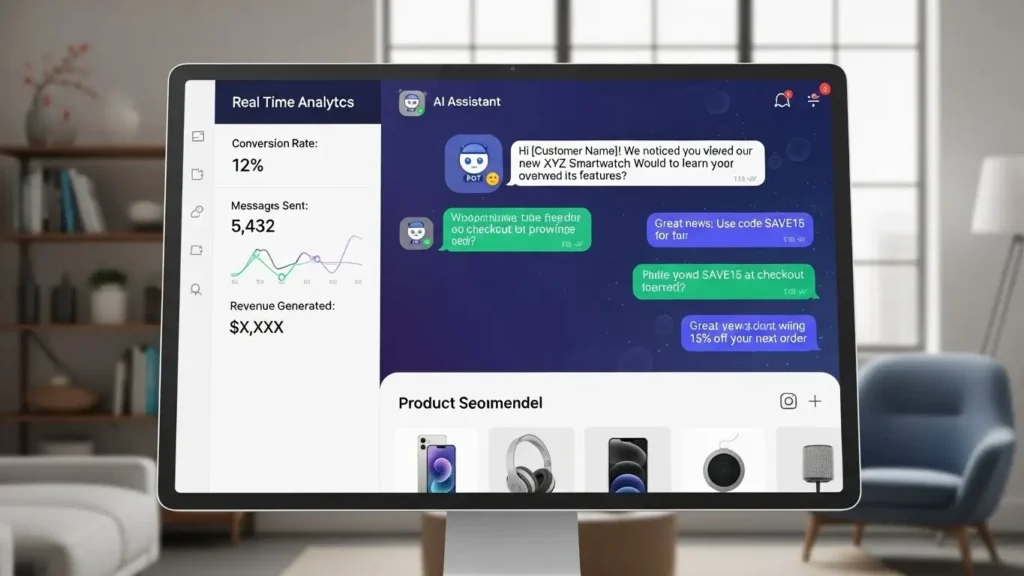
This ai automation implementation focuses on identifying warm opportunities (follows, comments, story views) and initiating a natural, human-like dialogue that instantly pre-qualifies the prospect and guides them into the sales pipeline.
Defining Your Ideal Prospect with a Lead Score
Before any ai chat can be deployed, you need a precise definition of a lead. This requires ai process automation to ingest data and apply a rigorous qualification structure, known as a lead score.
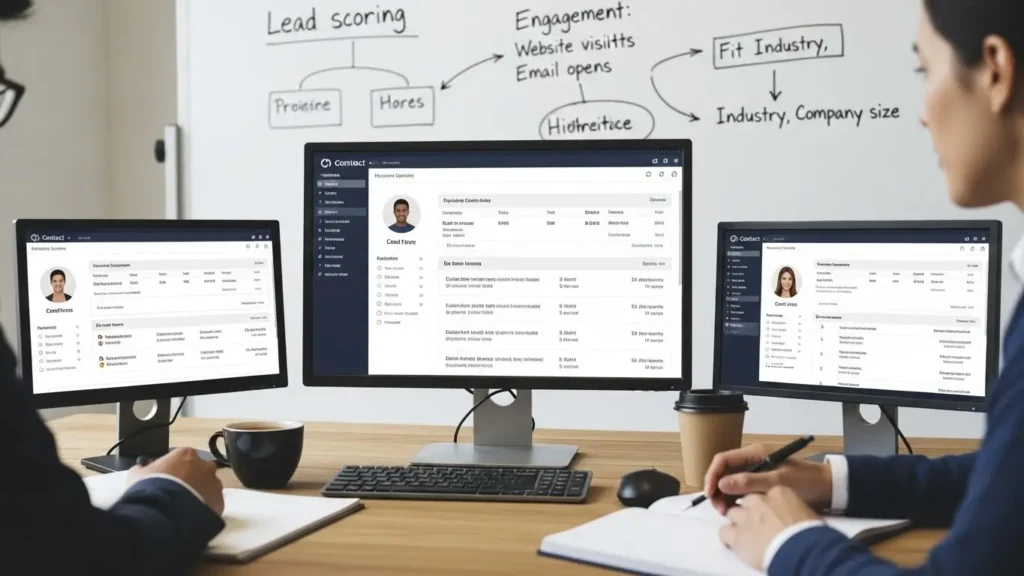
The initial step in this ai automation checklist is to clearly document your qualifying criteria. As the expert mentions, if a follower is a non-business profile with low activity, they are likely not an ideal customer profile (ICP). By clearly defining what an ideal lead looks like e.g., someone with an active business profile, consistent content posting or specific industry mentions you provide the AI with the necessary rules to prioritize interactions for your overall ai automations strategy.
This is where you integrate an ai automation platform Revio. This tool takes the raw data (new follower, story view) and applies your custom scoring logic, ensuring your human team only engages with the highest-potential ai automation use cases people who are genuinely ready to grow their business. This step ensures that every minute spent by a human salesperson is focused on a conversation with maximum conversion potential, leading to powerful ai automation success stories.
Mastering the Human Touchpoint: The “12-Year-Old” Chat Rule
The key to preventing your ai automation for customer service (or sales outreach) from feeling robotic is the tone and cadence of the message. The rule of thumb: act like you’re chatting like a 12-year-old short sentences, minimal punctuation and a natural, slightly fragmented flow. This strategy enhances the human element within your ai automations.

When engaging a new prospect, the first message must be a personalized, short burst that includes a specific observation, proving a human has actually looked at their profile. This is the art of ai automation personalization using AI to find the needle (the specific detail) in the haystack (the profile data) and crafting an initial message around it.
Example AI-Assisted Message Flow:
- AI Trigger: Prospect (Alex) comments on a post.
- AI Action: Scans Alex’s profile, identifies a recent acquisition or major project.
- Human Co-Pilot Suggestion: “Hey Alex, appreciate the following. Peaked at your website. Nice work on the last acquisition. Are you here for the vids? Or Actually looking to try to grow your business?“
This blend of machine efficiency and human empathy is what generates real ai revenue. Generic, copy-pasted blocks of text immediately signal a bot and lead to disengagement. By keeping the communication brief, specific and “human,” the business preserves the H2H connection the customer craves, even when supported by ai automations.
Leveraging AI as a Co-Pilot for the Sales Pipeline
Even with a perfect opening, sales conversations often stall when a prospect asks a nuanced question or presents an objection that an untrained sales development rep (SDR) might struggle with. This is where ai automation software shines as an in-the-moment co-pilot.

The co-pilot approach means ai is not running the conversation entirely, but instead suggesting the next-best response based on the conversation history and your established sales playbook. This is a form of ai automation for customer service where the tool provides:
- Pre-written, context-specific prompts.
- Suggestions based on objection handling.
- AI for process automation advice that keeps the conversation aligned with the sales goals.
This functionality effectively removes the risk of losing a deal due to human inexperience. The sales person still has to click “send,” maintaining the crucial human-in-the-loop connection, but the co-pilot dramatically increases their velocity and competence, ensuring the sales pipeline process moves smoothly toward conversion using smart ai automations.
The Fortune in the Follow-Up Sequence
The biggest difference between those who make millions in sales and those who don’t is simple: the fortune is made in the follow-up. Humans are notoriously poor at follow-up; they forget, they get busy or they fear being annoying. AI automations are perfect for this critical, yet tedious, task.

By setting up a defined ai workflow automation sequence such as 24 hours, 3 days, 7 days, 14 days and 21 days the ai ensures five touch points are delivered consistently. Critically, these follow-ups must be value-added, not just nagging. The ai can monitor their activity (e.g., posted content, viewed links) and suggest a contextually relevant value drop: “Hey, I noticed you posted this. Did you see this resource we created?“
A reliable ai automation platforms monitors the entire process, escalates stalled conversations and has your team approve the smart follow-ups before they are sent, maintaining the human element while capitalizing on the machine’s reliability. This strategic use of ai automation tools list ensures no valuable lead falls through the cracks, compounding the conversion rate and ultimately driving millions in new revenue.
The phenomenal productivity gains realized in the outbound stage, as demonstrated by the potential to generate 50% more revenue opportunities while cutting costs by 33%, inevitably lead to a beautiful problem: a deluge of incoming leads. However, an unmanaged flow of prospects can quickly clog the sales process, turning potential ai revenue into operational chaos. This is where strategic ai automations become essential.
This necessitates the second critical pillar of the million-dollar automated business: aggressive, accurate and instant lead qualification, done without human intervention.
Automation 2: AI Voice Agents for Lead Capture and Qualification
A single chat interaction does not equal a lead; it is merely the beginning of a dialogue. The true constraint in most growing businesses is not lead generation, but lead qualifying sifting the genuinely ready-to-buy prospects from those merely curious. Building a highly scalable, million-dollar business requires the deployment of next generation automation to handle this crucial step.

The AI Voice Agent: Your $1M Gatekeeper
The most efficient solution is using an ai-driven automation voice agent, which can autonomously call a prospect and conduct a high-fidelity qualification conversation. For a business, this is the ultimate $1M gatekeeper.

Tools like the YourAtlas exist to sit between the initial lead capture (e.g., social media DM, lead form, or inbound call) and the human sales team. This cognitive automation system can take a phone number from an inbound lead and initiate a call, asking the specific, tailored questions needed to determine fit and buying readiness.
For instance, if your business requires a minimum ad spend, the ai can ask the single most important question “How much are you spending on Facebook ads per month?” and then intelligently route the outcome. If the answer disqualifies the prospect, the automation solutions agent can politely redirect them to a different resource or solution, freeing up the human sales team’s calendar instantly. If they qualify, the ai guides them directly to the booking link.
This application of ai integration solutions is transformative. Studies show that sales representatives typically spend only 28% to 33% of their time actively selling; the rest is spent on administrative tasks or chasing unqualified leads. By offloading the entire qualification phase to the AI, you ensure your expensive human talent focuses their limited selling time on prospects who have been filtered, scrutinized and proven ready to convert, effectively leveraging ai automations.
Orchestrating Data Flow: CRM Integration and Data Repair
To ensure this ai workflow management ai runs smoothly, you must integrate the ai voice agent with your existing lead capture tools, such as CRM solutions like HubSpot or Salesforce, as well as ai automation platforms like Go High Level. This is the art of ai automation orchestration.

The integration must handle the flow of data bi-directionally, often requiring robust, reliable intelligent process automation. The data problem is real: phone numbers can be submitted in incorrect formats, missing country codes or containing typos. Without proper formatting, the AI dialer ai automations will fail, resulting in lost ai revenue.
However, instead of relying on a human to manually clean the data a task ripe for robotic process automation ai you can automate the solution using ai itself. The lead information, including the poorly formatted number, can be sent to a lightweight ai service which is instructed: “Using this information, reformat the phone number so that it includes the area code and country code for automated calling.” The ai can recognize the pattern, cleanse the data and send it back to the CRM perfectly formatted. This small, crucial step solves an inherent ai automation compliance challenge and ensures the call automation goes through every time, highlighting the immediate and practical benefits of ai for process automation.
The A/B Test for Growth: Twinning AI and Human Performance
When implementing such a powerful, complex tool, a “set it and forget it” mentality is a guaranteed recipe for failure, which speaks to one of the potential disadvantages of ai automation. To ensure high performance and maintain ai automation governance, you must run the ai automations in tandem with an existing human employee and constantly measure the results.

The recommended ai automation roadmap involves an A/B test: route half of the inbound leads to the human qualifier and the other half to the AI voice agent. This is where you leverage ai automation metrics to compare performance:
- Conversion Rate: Which segment has a higher lead-to-opportunity rate?
- Time-to-Qualify: How quickly does the AI qualify leads versus the human?
- Cost-Per-Qualified-Lead: What is the efficiency ratio of each channel?
By continuously measuring success and tweaking the AI’s script and criteria, you ensure that the system is not only generating higher-quality leads but also achieving a higher conversion rate, ultimately driving more enterprise ai automation returns. The case study where an AI freed up a sales calendar, reducing six weeks of backlog to two, but achieving a 50% close rate is the ultimate proof that quality, achieved through rigorous automated lead qualification, always trumps quantity. Furthermore, these refined ai automations provide the crucial leverage needed for exponential scaling.
Automation 3: Delivering Speed-to-Value with AI Onboarding and Support
Once the leads are qualified and sales are closed, the focus shifts entirely to delivery. This is a crucial pivot point, as the expert notes: clients don’t just want access, they want progress. Speed is the currency of customer retention and in the ai automation future, speed-to-value is the ultimate customer experience automation.

The stakes are high. Research indicates that replacing the value of one lost customer can require acquiring up to three new customers. This highlights the necessity of using ai automations for startups and scaled companies alike to shorten the time it takes for a customer to achieve their first win.
The Churn Killer: Triggering Instant Wins
The single biggest factor in preventing churn is the “instant win.” If a customer achieves a result no matter how small within their first week, they are exponentially more likely to stick around, refer others and eventually upsell. This focus on ai automation scalability creates a flywheel effect.

The initial onboarding phase must be designed around this concept. The trigger for your ai workflow should be the moment the payment is processed. This transaction should fire a ai workflow management ai that is designed to:
- Ask for the Smallest Win: An automated call or message that asks the customer: “What is the fastest, smallest win we can create for you this week?”
- Generate a Customized Solution: The AI takes that human answer and automatically generates the step-by-step solution, a personalized mini-plan or the exact resource link needed to deliver that instant value.
- Provide Instant Access: The AI gives them access to their customer community, their project folders and the personalized calendar link for a kick-off call all without human delay.
This strategic application of ai-driven automation transforms a complex human onboarding process into a seamless, high-velocity experience. It is the modern definition of a positive ai automation case study, showcasing the power of ai automations.
Eliminating Friction with AI Automation Orchestration
To power this frictionless onboarding, businesses rely on ai automation orchestration tools to connect disparate systems. While technical users may prefer robust frameworks like N8N, simpler alternatives such as Zapier or make.com can easily handle this enterprise ai automation requirement.

The goal is absolute human delay elimination. When the payment hits, the automation engine (N8N, Zapier, etc.) must instantly:
- Add the client to the community platform (e.g., Slack, Circle).
- Provision their project folder access (e.g., Google Drive, Asana).
- Send the initial “Welcome and Instant Win” message (via SMS or email) with the calendar link.
This is a demonstration of pure intelligent process automation. The machine handles the repetitive, cross-platform tasks that, if left to a human, would result in slow, inconsistent delivery the exact friction point that causes early-stage churn. Furthermore, for businesses in the digital product space, this ai automation for ecommerce model ensures that the virtual product is delivered at the speed of the transaction, enhancing customer trust and satisfaction immediately, thanks to sophisticated ai automations.
Smart Nudges and Conversion Triggers
After the initial win, the ai automation monitoring system takes over. The AI is constantly watching for signs of disengagement the “smart nudges” that keep customers on track.
- Did the customer fail to log into the portal within 72 hours? AI Nudge: Send a personalized SMS with a link to their initial win resource.
- Did they miss the scheduled kickoff call? AI Nudge: Send an email with a personalized note and a one-click reschedule link.
These proactive ai automation predictions about potential churn allow for timely, personalized intervention. This level of personalized service reduces Time-to-Value (TTV) a key metric influencing customer retention and fosters loyalty, helping businesses navigate the ai automation challenges associated with scaling customer support.
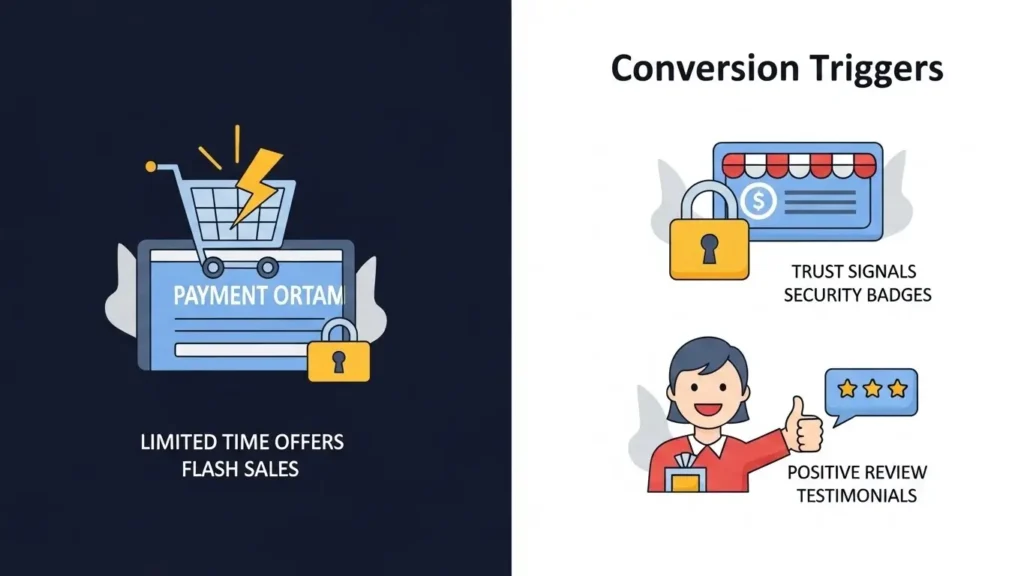
Finally, the same automation logic is used to create conversion triggers for upselling. The AI monitors the customer’s timeline and achieved success milestones to properly position the next logical offer. If a client buying a house (an ai automation use cases example) is set to move in three months, the AI can trigger a lawn care proposal based on their service timeline. This bespoke, timely and contextual outreach often automated using ai automation software and an ai automation platform is the final piece of the ai revenue equation for the existing customer base, where the cost of acquisition is zero and the trust is already established. These advanced ai automations significantly increase the Lifetime Value (LTV) of the customer.
Automation 4: AI Content and Marketing Distribution
The most consistent fuel for the automated business model is a constant stream of high-quality content, a process greatly enhanced by ai automations. However, the human effort required to produce blog posts, social media updates, email newsletters and video scripts across multiple platforms is immense. The fourth pillar of a fully automated, million-dollar business replaces this content production bottleneck with ai automations.

This strategy is not about generating low-quality filler; it’s about leveraging ai automation examples to perform the heavy lifting of repurposing and distribution based on a single piece of core, human-vetted content.
The Atomic Content Strategy: One to Many
An ai automation tools for developers or a specialized content AI platform can take a single, deep-dive asset for instance, a 3,000-word case study and instantly atomize it for every channel:
- Blog Post: The main content is live.
- Email Newsletter: The AI generates a 500-word summary and five bullet points for the weekly email.
- LinkedIn/Twitter: The AI extracts three key statistics and turns them into native social media posts with appropriate hashtags.
- Video Script: The AI restructures a section of the content into a 60-second video script for platforms like TikTok or Reels.
The system manages the entire scheduling and distribution lifecycle, ensuring that all platforms are fed with contextually relevant versions of the same core message, increasing reach while minimizing human time input. This workflow ensures message consistency across all channels, transforming a one-off effort into a relentless, omnipresent marketing machine, thanks to efficient ai automations.

Automation 5: Financial and Operational AI Automation
Achieving true success and scaling to the million-dollar threshold in an automated company necessitates that administrative functions be as streamlined and mechanized as the sales lifecycle. This is where enterprise ai automation transforms a successful small business into a high-leverage company, driven by efficient ai automations.

Instant Invoicing and Reporting
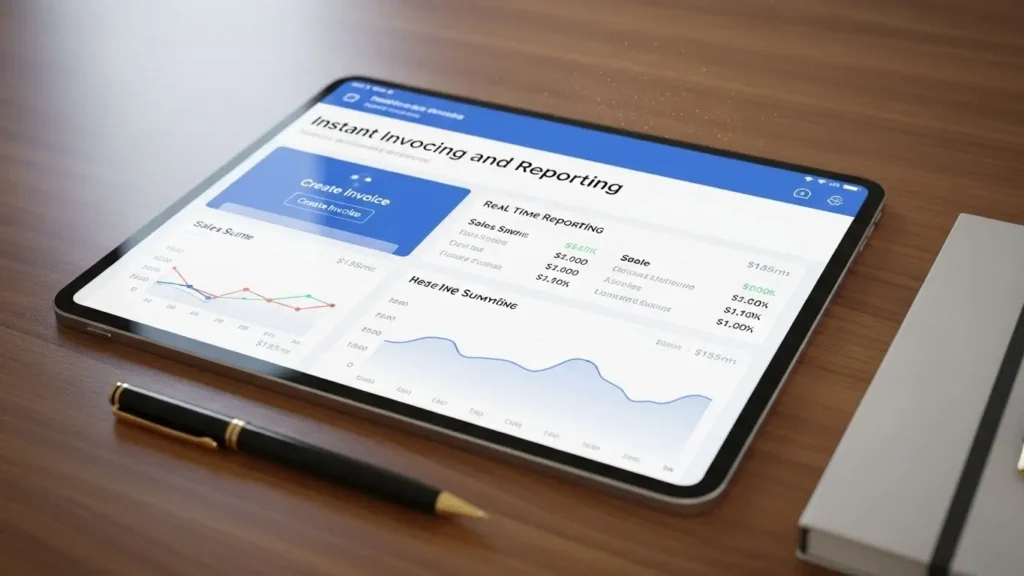
The transactional friction points invoicing, payment reconciliation and reporting are often the most manual tasks in a scaling business. Intelligent process automation solutions are designed to eliminate this administrative burden:
- Payment-to-Invoice Automation: The moment a deal is marked “Closed-Won” in the CRM (following the AI qualification process), the system automatically generates an invoice, emails it to the client and sets up a payment reminder sequence.
- Reconciliation: AI-powered accounting software can automatically match incoming bank deposits to the corresponding open invoices, eliminating the need for a bookkeeper to manually track payments.
- Performance Reporting: Instead of waiting for a monthly or quarterly report, the ai automation system is programmed to deliver daily, high-level dashboards showing the number of qualified leads, conversion rates and the health of the cash flow, allowing for real-time decision-making.
Tackling Financial AI Automation Challenges
While the benefits are significant, the key ai automation challenges in finance are accuracy and security. Integrating sensitive financial data requires a robust and secure setup. Many businesses find that building a simple, customized solution using internal tools or low-code platforms and then applying an AI layer (for categorization or anomaly detection) is more effective than relying on an expensive, all-in-one ERP system. This approach gives you the flexibility to adapt to a rapidly growing business model while maintaining full control over data security and compliance, a core strength of well-designed ai automations.

For example, an ai automation agent can monitor the daily cash flow against the forecasted sales pipeline, instantly flagging any deviation over a certain threshold (e.g., a sudden drop in expected recurring revenue) to the human CEO, turning a complex data analysis task into a simple, actionable alert.
Conclusion: The Million-Dollar Automation Blueprint
The path to a million-dollar automated business is not paved with a single piece of software, but with a strategic stack of AI-powered automations that collectively eliminate human labor from the most time-consuming and costly parts of the sales and delivery pipeline.

By deploying five core automations, your business transforms its leverage:
- AI Outbound: Reduces the Cost of Acquisition (CoA).
- AI Qualification: Increases Conversion Rate (CVR).
- AI Onboarding: Reduces Customer Churn.
- AI Content: Increases Marketing Reach and Consistency.
- AI Operations: Ensures Financial Visibility and Operational Scalability.
This blueprint creates a system where the business’s revenue and growth are decoupled from the amount of time its founders and employees spend working. By harnessing the power of ai automation, you shift from selling time to scaling systems, making a million-dollar business not just a possibility, but a logical outcome of disciplined automation.
FAQs:
Q1: What is the “Million-Dollar Automation Blueprint” and how does it lead to $1M in revenue with minimal human expense?
A: The Million-Dollar Automation Blueprint is a strategic framework that replaces high-cost human labor with five core AI automations across the entire sales and delivery lifecycle. It decouples revenue growth from headcount. By eliminating friction points like manual qualification, content generation and operational tasks, the blueprint creates a high-leverage business model where the systems not people drive lead flow, conversion, retention and scale, ensuring maximum ai revenue per employee.
Q2: How does the AI Voice Agent work for lead qualification and converting prospects?
A: The AI Voice Agent acts as a sophisticated, autonomous “Gatekeeper.” Using ai workflow automation, it instantly calls inbound leads to conduct a high-fidelity qualification conversation based on criteria like Budget, Authority, Need and Timeline (BANT). If the lead is unqualified, the AI redirects them, saving your sales team’s time. If they qualify, the AI guides them directly to a booking link, ensuring your human sales reps spend their limited selling time only on prospects who are proven to be ready to convert, leading to a much higher conversion rate. These AI-driven systems are powerful examples of effective ai automations.
Q3: How does intelligent process automation speed up Time-to-Value (TTV) to significantly reduce customer churn?
A: Customer churn is often caused by a slow, complex onboarding experience. Intelligent process automation eliminates this friction by triggering an instant, personalized workflow the moment payment is made. This system uses AI automation for customer service to identify the customer’s desired “instant win,” automatically provisions all their accounts and resources and sends them a personalized mini-plan. By immediately delivering value or a very short Time-to-Value (TTV) the customer’s satisfaction and loyalty are dramatically increased, which is the single biggest factor in preventing early-stage churn, a clear benefit of strategic ai automations.
Q4: What are the recommended AI automation platforms and tools for implementing this framework?
A: The framework relies on interconnecting specialized tools. For general ai automation platforms and orchestration, tools like Zapier, make.com, or N8N are essential for linking systems. For the AI Voice Agent (qualification), specialized ai automation tools like YourAtlas (referenced in the text) are used. For foundational sales and marketing, a robust CRM like Salesforce or HubSpot provides the data structure. The power of the blueprint comes from the ai automation implementation the strategic way these tools are connected rather than one single piece of software. Mastering these connections is key to successful ai automations.
Q5: What is the typical ROI of AI automation for sales and marketing processes?
A: The return on investment (ROI) for strategic AI automation is exceptionally high because it targets the most expensive human processes. Studies cited in the article indicate that proper lead qualification alone can allow a company to generate up to 50% more revenue opportunities at 33% less cost. By minimizing human effort in time-consuming tasks like outbound messaging, lead filtering and administrative follow-ups, AI automations deliver a massive return by multiplying the output of your existing team while minimizing the need for costly hiring.