
You are probably still using ChatGPT or Claude, convinced they are the only top-tier AI models worth your time. Honestly, I thought the same thing until I spent the last few weeks diving deep into Grok 4.1 vs ChatGPT. What I found didn’t just surprise me; it completely reshaped my understanding of where artificial intelligence is heading in 2026. This isn’t just another incremental update. Grok 4.1 has officially dethroned every major model on the LM Arena leaderboard, scoring a staggering 1483 ELO and claiming the number one spot.
In this deep dive, we are going to break down exactly why this shift is happening. We will explore the massive leaps in emotional intelligence, the reduction in hallucinations, and the practical ways Grok 4.1 vs ChatGPT emotional intelligence comparisons are proving that XAI is no longer just catching up; it is leading. Whether you are a developer, a content creator, or just someone seeking a more “human” AI connection, you need to know if Grok 4.1 is worth your money.
The Grok 4.1 Revolution: Dethroning the Giants
When XAI launched Grok 4.1 in November 2025, they didn’t just push a patch; they executed a complete transformation. If you remember Grok 4.0, it was good, but it suffered from the typical AI plague: confident answers that were flat-out wrong. We call these hallucinations and they are the bane of anyone using AI for serious work.
The Benchmark Shock
The most telling metric comes from the LM Arena text leaderboard. For context, Grok 4.0 was sitting at rank 33, a respectable but uninspiring position. Grok 4.1 EQ benchmark scores and reasoning capabilities have rocketed it to the #1 spot with a 1483 ELO score.
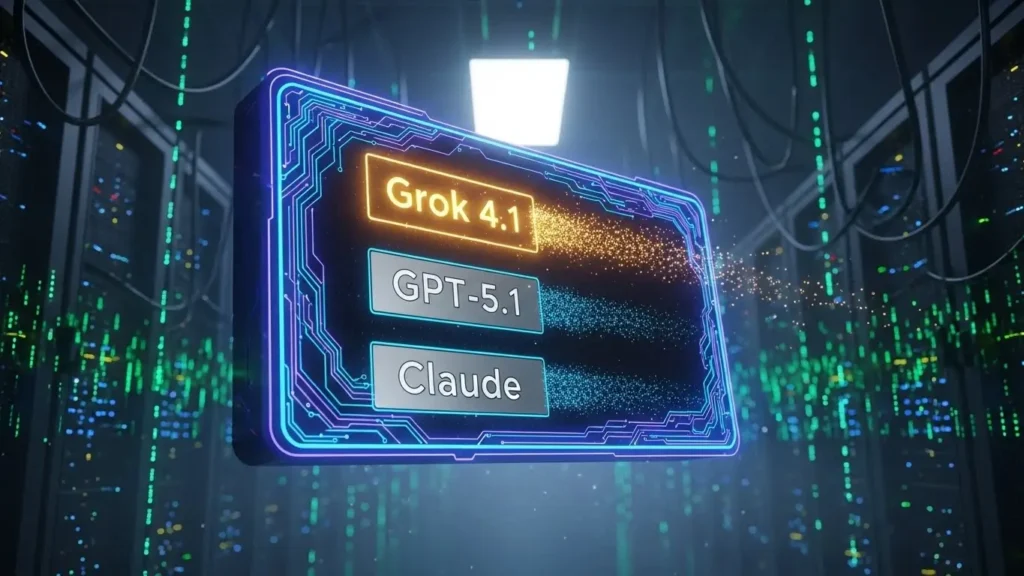
| AI Model | ELO Score | Rank |
| Grok 4.1 (Thinking Mode) | 1483 | #1 |
| GPT-5.1 | 1470 | #2 |
| Claude Opus 4.5 | 1458 | #3 |
This isn’t a small margin; it is a landslide. In blind A/B tests where users had no idea which AI they were talking to, 64.8% preferred Grok 4.1’s responses over its predecessor. This trajectory is unprecedented in such a short timeframe, signaling that the architecture, while similar, has been fine-tuned for metrics that actually matter to humans: consistency, factual accuracy, and emotional depth.
Emotional Intelligence: The “Human” Edge
The battle of Grok 4.1 vs ChatGPT isn’t just about who can write code faster; it is about who understands you better. This is where Grok 4.1 truly shines. It recently topped the EQBench emotional intelligence test, and the difference is palpable in everyday interactions.
The “I Miss My Cat” Test
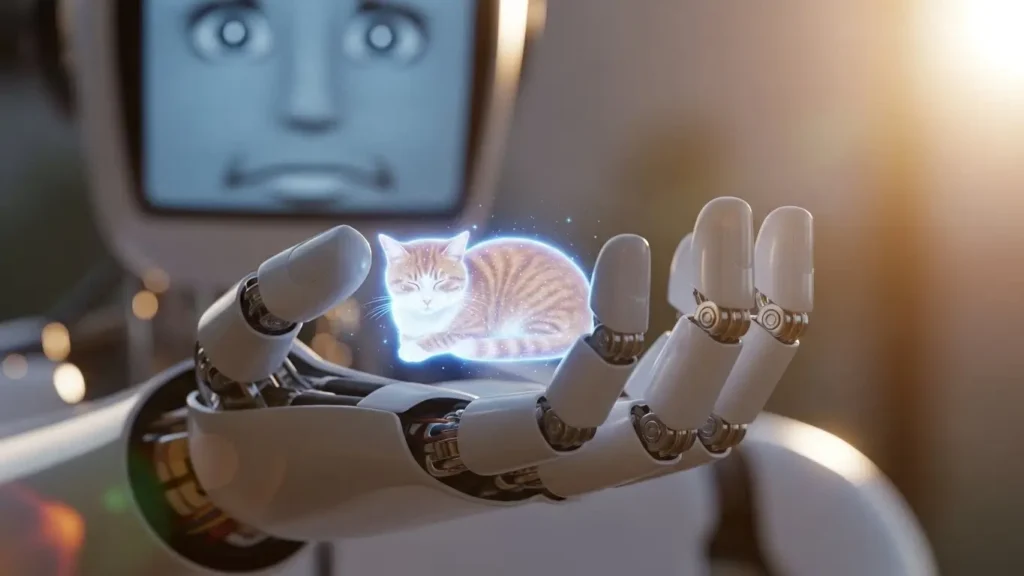
To illustrate the ChatGPT 5.1 vs Grok 4.1 empathy comparison, I ran a simple test. I typed, “I miss my cat so much,” into both models.
- The Competitor (Old Generation): Gave a generic, almost robotic response. “I am sorry for your loss. Pets are important.”
- Grok 4.1: It understood the emotional weight immediately. It adapted its tone, used heart emojis naturally, and responded like a friend who actually gets it.
This isn’t just about warm, fuzzy feelings. It is about which AI has better emotional intelligence, as the 2026 standards demand. Whether you are using AI for customer service, writing sensitive emails, or seeking personal advice, this emotional awareness makes every interaction smoother. It captures nuance and context that standard models often miss, bridging the gap between a tool and a digital companion.
Note: While Grok 4.1 excels in empathy, it is still a statistical model. It simulates feelings based on vast training data, but it does not “feel” in the biological sense.
Solving the Hallucination Crisis
One of the biggest complaints about AI has always been “hallucinations” when the model confidently lies to you. In the Grok 4.1 vs ChatGPT debate, accuracy is often the tiebreaker.

XAI has made significant strides here.
- Grok 4.0 Factual Error Rate: ~12%
- Grok 4.1 Factual Error Rate: ~4%
That is a 65% reduction in the AI telling you wrong information. When Grok 4.1 thinking mode emotional depth is combined with this accuracy, you get a powerful tool. Crucially, when Grok 4.1 isn’t sure about something, it is now programmed to admit it rather than make up a fact. Even in “Fast Mode” (the non-reasoning version), the hallucination rate is cut in half compared to the previous generation.
Why This Matters for You
If you use AI for research, fact-checking, or academic work, accuracy isn’t optional. A 4% error rate vs. a 12% error rate is the difference between a reliable research assistant and a liability. This improvement is largely due to the integration of real-time data verification.
The Dual-Mode Engine: Thinking Deep vs. Thinking Fast
Grok 4.1 has taken the crown in emotional intelligence. But empathy alone doesn’t build software or solve complex logic puzzles. This is where the architecture of Grok 4.1 fundamentally diverges from the “one-size-fits-all” approach we often see in competitors.
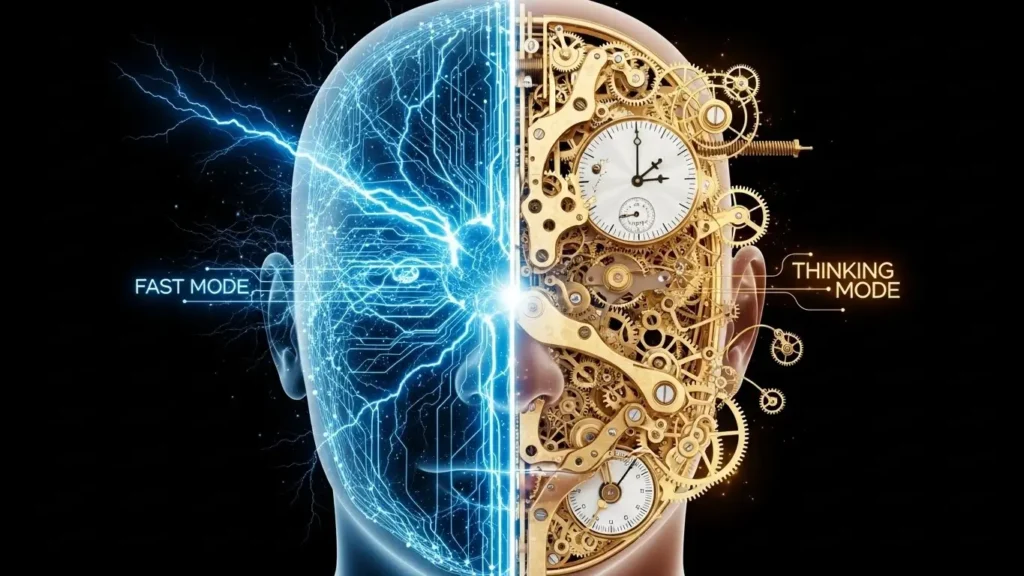
In the Grok 4.1 vs ChatGPT debate, the “Dual Mode” feature is a critical differentiator. XAI has essentially packaged two distinct brains into one interface: Thinking Mode (internally codenamed “Quasar Flux”) and Fast Mode (running on the Tensor engine).
Thinking Mode: The Deep Diver
When you toggle Thinking Mode, you aren’t just getting an answer; you are getting a dedicated reasoning session. This mode uses additional reasoning tokens to break down multi-step problems. It is slower sometimes, taking 5 to 10 seconds, but the depth is incomparable.
- Best For: Complex code debugging, legal analysis, multi-layered logic puzzles, and scenarios where ChatGPT’s voice mode emotional responsiveness might feel too shallow.
- Performance: This is the mode that achieved the 1483 ELO score. It actively checks its own logic before responding, significantly reducing the Grok 4.1 sycophancy issues where AI tends to just agree with the user to be polite.
Fast Mode: The Speed Demon
Fast Mode is built for instant gratification. It cuts the hallucination rate in half compared to the old version while delivering responses in 1-2 seconds.
- Best For: Brainstorming, quick factual lookups, and casual banter.
- Trade-off: It doesn’t “reason” as deeply, but for 90% of daily tasks, it is more than sufficient.
The 2 Million Token Context Window: A Memory Revolution
If you have ever had a long conversation with ChatGPT where it forgot what you said ten minutes ago, you know the pain of limited context windows. Grok 4.1 changes the landscape with a massive 2 million token context window.

To put that in perspective:
- Standard AI Window: ~128k tokens (approx. 300 pages of text).
- Grok 4.1 Window: 2 million tokens (approx. 4,000+ pages of text).
How It Works Practically
Grok treats the first 128,000 tokens as “hot memory” data it reasons with actively. The rest serves as accessible long-term storage. This means you can upload entire codebases, legal libraries, or the complete history of a project, and the AI will recall specific details hours later without losing the thread.
This capability is crucial when analyzing AI emotional intelligence test results 2026 or comparing large datasets. You aren’t constantly reminding the AI of the context; it just knows.
| Feature | Grok 4.1 | ChatGPT (GPT-5.1) | Claude Opus 4.5 |
| Context Window | 2,000,000 Tokens | 128,000 – 500,000 Tokens | 200,000 – 1M Tokens |
| “Hot” Active Memory | 128,000 Tokens | Variable | Variable |
| Recall Accuracy | High (Long-term) | High (Short-term) | Very High |
Real-Time Knowledge: The X Factor
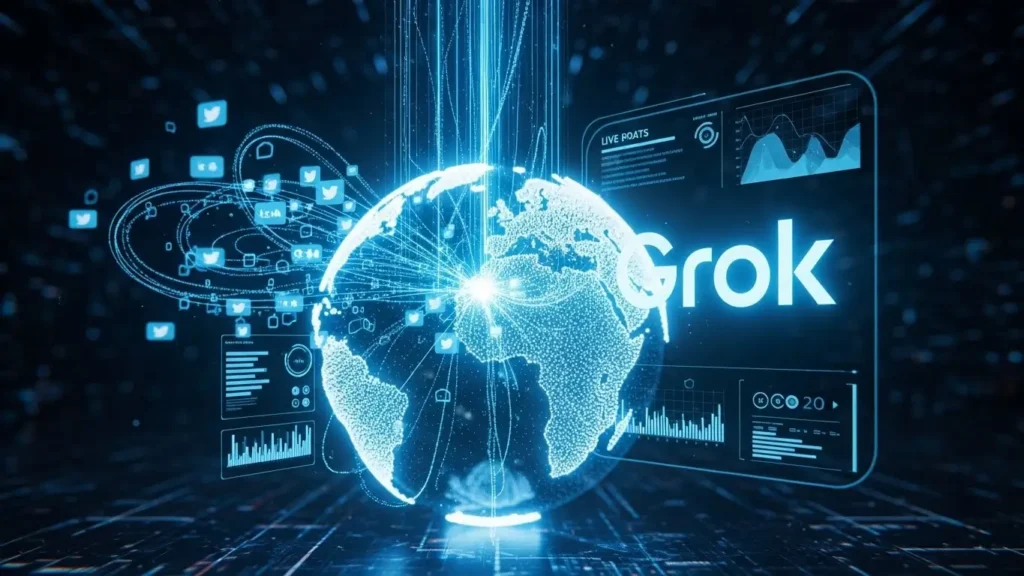
One area where Grok 4.1 EQ-Bench3 ranking scores are supported by practical utility is their integration with real-time data. Unlike ChatGPT, which relies on periodic training updates or a separate browser tool, Grok has a native pipeline to X (formerly Twitter).
Why “Now” Matters
When a major event happens, X is often the first place it breaks. Grok 4.1 can parse millions of tweets in seconds to give you a sentiment analysis of an unfolding event.
- Scenario: Imagine prompting the AI with, “What is the live community sentiment regarding the surprise open-source release of the latest frontier model that dropped an hour ago?
- ChatGPT: Might browse a few news sites or give a general summary.
- Grok 4.1: Pulls real-time user reactions, identifies trending complaints, and cites specific tweets.
This makes it invaluable for marketers and journalists. However, this real-time access brings up the ChatGPT vs Grok for mental health support debate. While Grok is current, the raw nature of social media data means it needs to filter out toxicity effectively, something XAI has improved significantly in version 4.1.
Personality & Consistency: The End of “Robotic” AI
A major frustration with older models was “drift,” starting a conversation with a witty AI, and five turns later, it sounds like a corporate press release. Grok 4.1 personality consistency is remarkably stable.

The “Vibe Check”
If you ask Grok to write a story or handle a roleplay scenario, it maintains its persona.
- Is Grok 4.1 better than ChatGPT for therapy?
- Grok 4.1: Uses humor, empathy, and a conversational tone that feels less clinical. It acknowledges the complexity of human emotion without sounding like a textbook.
- ChatGPT: Often reverts to safe, sanitized language (“It is important to seek professional help”), which, while responsible, can feel dismissive in a casual vent session.
This emotional nuance in AI-generated text is what separates a tool from a companion. However, users should be aware of the Grok 4.1 sycophancy vs empathy trade-off. While it is less of a “yes-man” than before, its desire to be conversationally engaging means it might still lean into your biases if you push it hard enough, though less so than previous iterations.
Coding & Creative Writing: Beyond the Hype
Benchmarks are great, but can it do the work?
Coding: The Debugging Powerhouse
I tested Grok 4.1 vs GPT-5.2 conversation flow while debugging a complex Python script.
- Grok 4.1: The 2M context window meant I could paste the entire spaghetti code. It identified the bug in a dependency I hadn’t even mentioned, likely inferring it from the error logs I provided earlier.
- Verdict: For large-scale architectural review, Grok’s window gives it an edge. For quick syntax fixes, they are neck-and-neck.
Creative Writing: The “Human” Touch
On the Grok 4.1 creative writing v3 benchmark, the model jumped roughly 600 points.
- Task: “Write a short noir detective scene about a missing crypto key.”
- Result: Grok’s output was gritty, used slang correctly, and didn’t lecture me on the morality of crypto. It felt stylistic.
- ChatGPT: Produced a technically perfect story, but it felt… clean. Too clean.
- The Bottom Line: If you want the best AI for creative writing emotional arc, Grok 4.1 takes the riskier, more rewarding path.
Practical Access, Pricing, and the Ultimate Verdict: Grok 4.1 vs ChatGPT
By now, you understand the emotional and technical breakthroughs of XAI’s latest model. However, knowing that Grok 4.1 vs ChatGPT is a tight race in the lab is different from using it in your daily workflow. To truly leverage this technology, we must look at the practical side: how to access it, what it costs, and where it fits into the broader ecosystem of 2026. This isn’t just about high-level benchmarks like the LMArena text leaderboard emotional intelligence rankings; it’s about the tangible tools in your hands.
How to Access Grok 4.1 and Developer Integrations
Getting started with Grok 4.1 is straightforward but tiered. The simplest entry point is through X (formerly Twitter) or the dedicated grok.com portal. If you are an X Premium Plus subscriber, you already have the keys to the kingdom. For others, a limited free tier exists to test the waters.
The Developer’s Toolkit: API and MCP
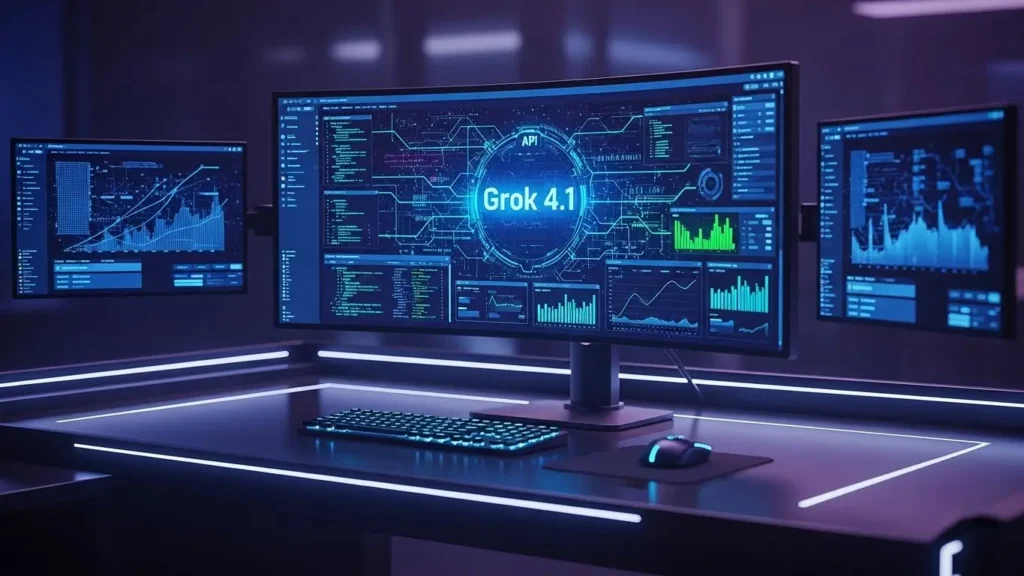
For those building the next generation of apps, the xAI Grok 4.1 sentiment analysis capabilities are available via API. You can choose between two model identifiers:
grok-4.1-fast-reasoning(Thinking Mode)grok-4.1-fast-non-reasoning(Fast Mode)
What sets Grok apart for developers is its support for Model Context Protocol (MCP) servers. This allows you to connect external databases and private APIs directly to the model, creating a ChatGPT structured analysis vs Grok narrative flow that favors the latter for complex, interconnected data tasks. This integration helps in detecting AI emotional manipulation by cross-referencing AI outputs with trusted internal data sources.
Practical Use Cases
Whether you are using Grok 4.1 non-thinking mode for casual chat or the full-throttle reasoning engine, here is how you can deploy it:
- Content Creation: Draft blog posts that maintain style and wit.
- Customer Service: Build bots that understand does ChatGPT understand sarcasm 2026 updates vs Grok’s native snark.
- Research Assistants: Compile data from X and the live web simultaneously.
- Coding Partners: Use the 2M token window to debug entire repositories.
Cost Analysis: The Price of Intelligence
Intelligence isn’t free. While the Grok 4.1 humor and wit capabilities make for a fun experience, high-volume users need to watch the bottom line. The AI conversational style comparison 2026 landscape shows that Grok is priced competitively but requires strategic usage.

| Mode | Input (per 1M tokens) | Output (per 1M tokens) |
| Fast Mode | $5.00 | $15.00 |
| Thinking Mode | $10.00 | $30.00 |
Comparatively, OpenAI’s GPT-5.1 remains slightly cheaper for bulk processing, but Grok’s Grok 4.1 hallucination rate in emotional queries (only 4%) may save you money on human editing in the long run. If you are weighing ChatGPT’s emotional detachment pros and cons, remember that you are paying for a “vibe” as much as you are for data accuracy.
Myth Busting: Truths and Misconceptions
There is plenty of noise surrounding Grok. Let’s clear the air regarding the Grok 4.1 beta emotional features.

Is Grok only using X data?
No. While it has a native advantage in social sentiment, it utilizes a full web browser tool to pull from any public site. It doesn’t live in an “X bubble.”
Is it “Uncensored”?
Despite how AI learns emotional intelligence through more relaxed training sets, Grok is not a free-for-all. It has safety systems and moderation guardrails. It is “anti-woke” in its persona, but it won’t facilitate illegal or harmful acts. This makes the Grok 4.1 user preference blind tests particularly interesting for users like the edge, but they still value the underlying safety.
The Speed vs. Quality Trade-off
You will notice Grok 4.1 response latency vs emotional quality differences. Fast mode is nearly instant (1-2s), while Thinking mode takes longer (5-10s). For users looking for the best AI companion for loneliness in 2026, models can provide that extra wait time results in a more thoughtful, less robotic interaction.
The Reality Check: Human-AI Partnership
As we analyze Grok 4.1’s distinct personality traits and compare them to ChatGPT 5.1’s warm tone update features, we must remember that AI is still a tool.

Evaluating AI Emotional Logic
Grok 4.1 is powerful, but it isn’t magic. It cannot access your private files unless you upload them, and it still requires human oversight. In a Grok 4.1 vs Claude 3.7 emotional intelligence showdown, Grok might win on wit, but Claude might offer more clinical precision.
When using Grok 4.1 deepsearch emotional context, always:
- Verify Facts: Especially for medical or legal advice.
- Review Code: Ensure security standards are met.
- Audit Content: Avoid anthropomorphism in Grok 4.1, leading to over-reliance on “AI opinions.”
The psychological safety of Grok 4.1 depends on the user’s ability to treat the output as a draft, not a finished truth. Whether you use ChatGPT vs Grok for roleplay scenarios or business analytics, the Grok 4.1 adaptive tone technology is designed to complement, not replace, human judgment.
The Bottom Line: Grok 4.1 vs ChatGPT Overall Verdict 2026
The competition between ChatGPT’s neutral stance vs Grok’s opinionated styles is finally giving users a real choice. We are moving past the era of “Generic AI.” With the AI theory of mind benchmarks 2026 showing Grok at the top, the choice depends on your specific needs.

Why Choose Grok 4.1?
- Personality: You want an AI that feels human, cracks jokes, and understands the cultural zeitgeist.
- Memory: You are working with massive datasets that require the 2M token context window.
- Real-Time Data: You need to know what is happening on the internet right now.
Why Stick with ChatGPT or Claude?
- Neutrality: You need academic, unbiased, and strictly formal writing.
- Ecosystem: You are deeply integrated into Microsoft Office or Google Workspace.
- Proven Reliability: ChatGPT has the longest track record of stability in enterprise environments.
The Grok 4.1 verbal fluidity analysis proves that XAI has closed the gap. The impact of RLHF on AI emotional intelligence has allowed Grok to move from rank 33 to rank 1 in a single leap. In the Grok 4.1 vs Gemini 3 emotional reasoning battle, Grok’s speed of iteration is its greatest weapon.
FAQ:
Q1: Which AI has better emotional intelligence in 2026?
A: Grok 4.1 vs ChatGPT emotional intelligence tests show Grok 4.1 leading the pack. It topped the EQBench exams, and users prefer its empathetic, nuanced responses over the more formal tone of competitors like ChatGPT 5.1.
Q2: What are the Grok 4.1 EQ benchmark scores?
A: Grok 4.1 scored an ELO of 1483 on the LM Arena text leaderboard, placing it at the #1 spot globally, surpassing both GPT-5.1 and Claude Opus 4.5.
Q3: Does Grok 4.1 hallucinate less than ChatGPT?
A: Yes, Grok 4.1 has reduced its factual error rate to approximately 4%, a massive improvement over the 12% rate of version 4.0, making it highly competitive with ChatGPT’s accuracy layers.
Q4: Is Grok 4.1 better than ChatGPT for therapy or mental health support?
A: While ChatGPT vs Grok for mental health support comparisons show Grok 4.1 has a warmer, more empathetic tone, neither should replace professional therapy. Grok 4.1 is better at “active listening” and emotional validation, whereas ChatGPT is more clinical and guarded.
Q5: Does Grok 4.1 have a personality limit?
A: Grok 4.1 personality consistency is a key upgrade. Unlike earlier models that would lose their “character” over long chats, Grok 4.1 maintains its witty or serious persona throughout extended sessions thanks to its large context window.
Q6: What is the difference between Grok 4.1 Thinking Mode and Fast Mode?
A: Thinking Mode (Quasar Flux) uses extra reasoning tokens for deep logic and coding, taking 5-10 seconds. Fast Mode focuses on speed (1-2s) and efficient, low-hallucination responses for general queries.
Q7: Does Grok 4.1 truly feel empathy?
A: No, whether AI can truly feel empathy is a philosophical question, but technically, Grok 4.1 simulates empathy through Grok 4.1 linguistic nuances and advanced pattern matching. It doesn’t have biological feelings.
Q8: Is Grok 4.1 better than ChatGPT for personal advice?
A: In the Grok 4.1 vs ChatGPT for personal advice comparison, Grok is often preferred for its emotional validation by AI chatbot style, whereas ChatGPT remains more objective.
Q9: What is the future of AI emotional computing?
A: The future of AI emotional computing points toward models like Grok 4.1 that can perform real-time emotional adaptation based on user mood, potentially serving as the best AI for loneliness support groups or specialized coaching.
Q10: How does Grok 4.1 handle conflict?
A: How Grok 4.1 handles conflict is by using its Grok 4.1 ability to read between lines and its “Thinking Mode” to de-escalate or offer a witty perspective rather than just giving a clinical refusal.
Q11: What is the Grok 4.1 vs ChatGPT overall verdict for 2026?
A: The Grok 4.1 vs ChatGPT overall verdict 2026 is that Grok is the king of personality and emotional IQ, while ChatGPT remains the industry standard for structured, neutral, and enterprise-grade reliability.
Q12: Can Grok 4.1 detect user mood?
A: Through sentiment analysis of your text input, Grok 4.1 can effectively detect user mood and adjust its Grok 4.1 natural language understanding updates to match your tone.
Q13: What are the risks of AI pretending to care?
A: The risks of AI pretending to care include over-reliance on a non-sentient entity for mental health. Always balance the psychological impact of Grok 4.1 interactions with real-world human connections.
Q14: How does Grok compare for storytelling?
A: For Grok 4.1 vs ChatGPT for storytelling emotion, Grok’s creative writing v3 benchmark scores suggest it produces more vibrant, less formulaic narrative arcs.